
Scandinavian Sauna Aesthetics That Blend Minimalist Design with Warmth and Comfort
There’s something deeply appealing about stepping into a Scandinavian sauna. Beyond the promise of heat and relaxation, these spaces offer a visual experience that feels both calming and intentional.
What makes Nordic sauna design so appealing is its focus on simplicity, removing unnecessary elements while still creating a space that is comfortable and soothing. This delicate balance between minimalism and comfort has made Scandinavian sauna aesthetics a source of inspiration far beyond the shores of Finland, Sweden, and Norway.
The Philosophy Behind Nordic Sauna Design
Scandinavian design philosophy runs much deeper than simple decoration choices. At the heart of the concept is “lagom,” a Swedish idea centered on balance and having just enough. This principle shapes every aspect of sauna design, from the selection of materials to the placement of a single window.
The approach prioritizes function without sacrificing beauty. Every element serves a purpose, yet nothing feels cold or sterile. Natural materials take center stage, honest in their presentation and allowed to show their inherent character. Wood grain patterns, stone textures, and the play of light become the primary design features rather than added embellishments.
This design philosophy also reflects a deep connection to nature. The long, dark Nordic winters have cultivated an appreciation for warmth, light, and natural beauty that manifests beautifully in sauna spaces. What they provide is more than warmth; they create a quiet refuge that respects the harmony between people and nature.
The presence of approximately 3.3 million saunas among 5.5 million people in Finland, nearly one for every two residents, shows how central these spaces are to the region’s culture.
Natural Materials as the Foundation
Walk into any authentic Scandinavian sauna, and the materials tell their own story. Wood dominates the space, creating an immediate sense of warmth and connection to nature.
Wood Selection and Treatment
- Nordic designers favor local species like Finnish pine, spruce, and heat-treated aspen, chosen for their ability to respond well to temperature changes and release pleasant aromas when heated.
- The wood typically remains untreated or receives only minimal finishing, allowing the material to breathe and preventing chemical odors in the heat.
- Natural variations in wood grain create visual interest without decorative elements — knots, color variations, and growth patterns become design features in their own right
Stone makes frequent appearances as well, adding both functional and aesthetic value to the space.
Stone Elements
- Smooth river rocks or carefully selected sauna stones are often stacked near the heat source or incorporated into flooring details.
- The contrast between warm wood and cool stone creates visual balance while serving practical heating purposes.
Glass Integration
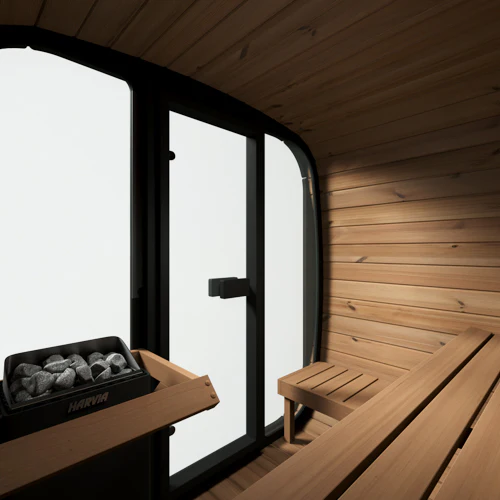
- Glass plays a strategic role in modern Scandinavian saunas, transforming the experience through connectivity with the outdoors.
- Large windows or glass walls blur the boundary between interior and exterior spaces, bringing views of forests, lakes, or snow-covered landscapes directly into the sauna.
- Even in urban settings, thoughtfully placed windows capture available natural light and create a sense of openness that prevents the space from feeling confined.
- Strategic glass placement ensures the minimalist space never feels cramped or claustrophobic.
These materials are carefully selected for a reason, with each one playing a distinct role in shaping the warm, minimalist look of Scandinavian sauna design.
The Color Palette of Calm
Color choices in Scandinavian sauna design lean heavily toward nature’s own palette. Light woods in honey and amber tones create the foundation, their warm hues intensified by the glow of heat and light. These are complemented by whites, soft grays, and the occasional charcoal accent.
The restrained color scheme serves multiple purposes. Lighter tones help smaller sauna spaces feel more open and airy. They also reflect what little light might be available during the darker months, making the most of every ray. The natural wood tones add warmth that prevents the minimalist aesthetic from feeling cold or unwelcoming.
When darker elements appear, they do so with intention. Charred wood or black stone might accent certain areas, creating visual depth and grounding the lighter elements. These darker touches often reference traditional building techniques or connect to the landscape’s winter palette.
Light as a Design Element
Lighting in Scandinavian saunas deserves special attention. The Nordic relationship with light, or the seasonal lack thereof, has created a culture that understands illumination as essential to wellbeing. Sauna lighting reflects this understanding through careful, layered approaches.
Natural light takes priority whenever possible. Strategic window placement captures changing daylight throughout the day, connecting sauna users to the rhythm of nature. During the long summer days, this might mean extended twilight filtering through the space. In winter, it could mean the precious few hours of daylight or the ethereal glow of moonlight on snow.
Artificial lighting in these spaces tends toward warm, gentle sources. Recessed fixtures, hidden LED strips, or traditional lantern-style lights create ambient illumination without harsh glare. Rather than flooding the space with light, the goal is to shape a soft, peaceful atmosphere that enhances the sauna for stress relief and relaxation.
Some modern Scandinavian saunas incorporate chromotherapy or subtle color-changing lights, though these additions are handled with characteristic restraint. The effects remain gentle and optional, never overwhelming the space’s natural character.
Furniture and Fixtures
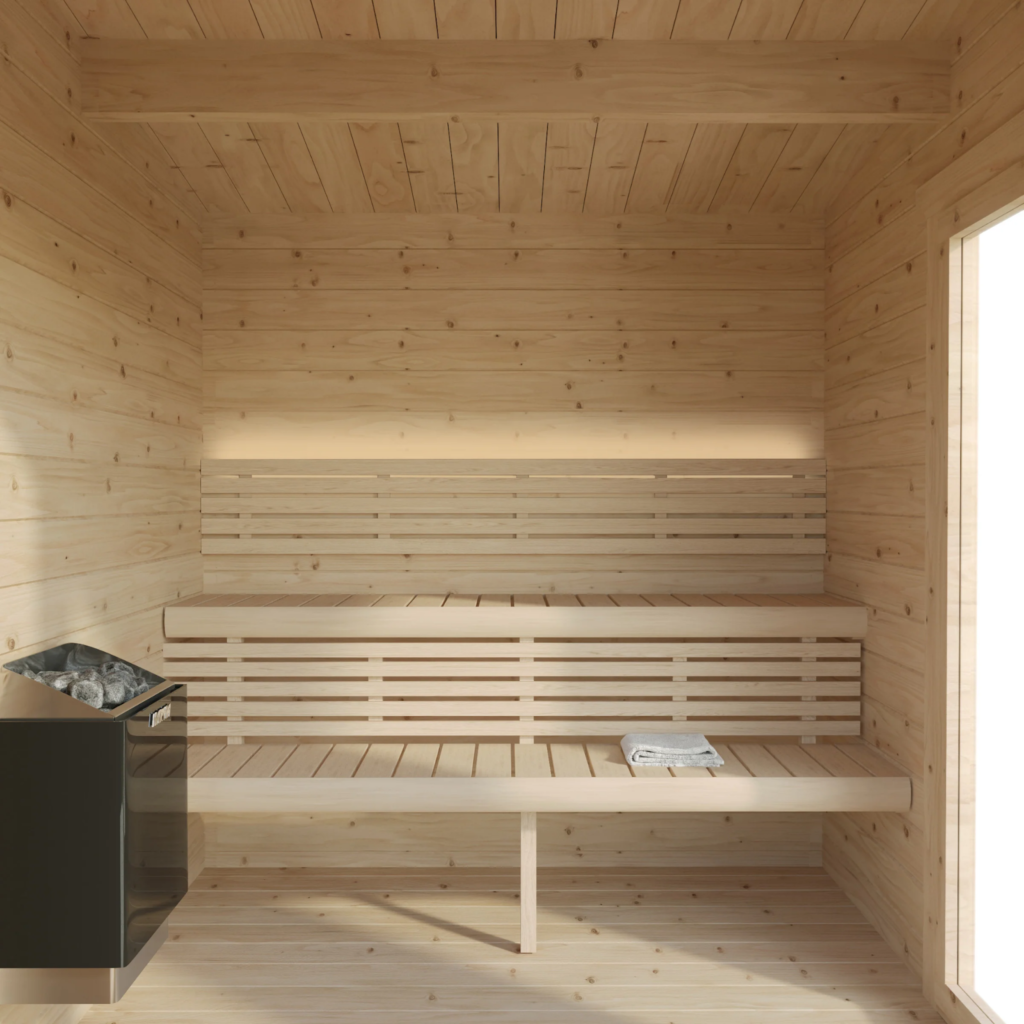
Seating in Scandinavian saunas follows clean, simple lines. Benches are typically constructed from the same wood as the walls, creating a cohesive visual flow. Multiple levels allow users to choose their preferred temperature zone, with the design maintaining its minimalist aesthetic even in multi-tiered configurations.
The benches themselves often feature gently rounded edges for comfort, showing that minimalism needn’t mean discomfort. Spacing between slats allows for air circulation and water drainage while creating subtle linear patterns that add visual interest.
Storage solutions, when present, integrate seamlessly into the overall design. Built-in niches or simple wooden shelves provide space for towels and essentials without cluttering the visual field. Everything has its place, carefully considered to maintain the sense of order and calm.
Hardware and fixtures stay simple and functional. Door handles, hooks, and any necessary mechanical elements are chosen for their understated design. Stainless steel or brushed metal finishes appear occasionally, providing a subtle contrast to the dominant wood tones without demanding attention.
Creating Warmth Within Minimalism
The challenge of Scandinavian sauna design lies in achieving warmth and comfort within a minimalist framework. This balance is reached through several thoughtful approaches.
Texture plays a crucial role. While the design palette remains simple, the interplay of different wood grains, the smoothness of stone, and the occasional textile element create tactile variety that keeps the space from feeling monotonous. Rough-hewn beams might contrast with smooth bench surfaces, or a woven mat might provide a soft accent.
Proportions matter enormously. Scandinavian designers pay careful attention to the relationship between ceiling height, bench depth, and overall space dimensions. These proportions draw from both traditional sauna building and principles of human comfort, creating spaces that feel neither cramped nor impersonal.
The sauna’s connection to adjacent spaces also contributes to the sense of warmth. A view into a cozy changing room, a glimpse of a welcoming shower area, or the sight of a cool-down space with comfortable seating — these visual connections create a sense of journey and hospitality that extends beyond the sauna chamber itself.
Modern Interpretations and Innovations
Contemporary Scandinavian sauna design continues to evolve while honoring traditional principles. Architects and designers experiment with form, creating barrel-shaped outdoor saunas, geometric glass structures, and floating lake saunas that push aesthetic boundaries while maintaining the core values of simplicity and natural materials.
Technology integration happens thoughtfully. Modern heating systems, humidity controls, and sound systems appear in high-end designs, but they’re usually hidden or minimally visible. The focus remains on the experience rather than the equipment enabling it.
There is now a stronger push toward sustainable practices than ever before. Designers select locally sourced materials, incorporate energy-efficient heating methods, and consider the entire lifecycle of their constructions. This environmental consciousness aligns perfectly with the Scandinavian ethos of respect for nature.
Bringing the Aesthetic Home
The principles of Scandinavian sauna design translate beautifully to various settings and scales. A basement home sauna can capture the same essence as a lakeside retreat through careful material selection and attention to lighting. Even a converted closet can become a meditative space when designed with these principles in mind.
The key lies in prioritizing quality over quantity. Choosing one beautiful wood species throughout creates more impact than mixing multiple materials. Investing in proper lighting transforms the atmosphere more effectively than adding decorative elements. Maintaining clear sightlines and uncluttered surfaces contributes to the sense of peace that defines these spaces.
Scandinavian sauna aesthetics remind us that true luxury often lies in simplicity. By stripping away the unnecessary and focusing on what truly matters — natural materials, beautiful light, and thoughtful proportions — these designs create spaces that nurture both body and spirit.
The warmth comes not from elaborate decoration but from the honest beauty of wood, stone, and light working in harmony. This is a design that doesn’t shout for attention but quietly invites people in, offering comfort, restoration, and a moment of peace in an often chaotic world.
Author Bio
Mark Adams is the resident sauna expert at SaunaHeaters.com, where he shares practical tips and advice on sauna heaters, maintenance, and wellness. He firmly believes that life’s best moments happen somewhere between a good steam and an ice-cold plunge.