
Top 5 Cybersecurity Risks for Businesses
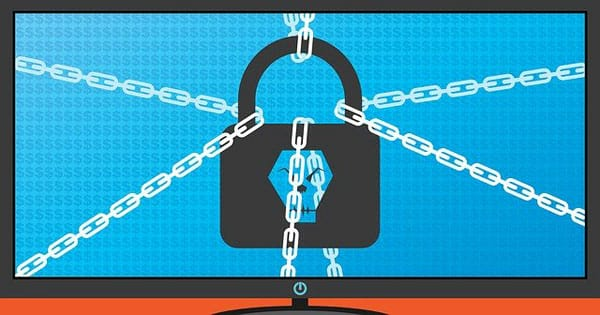
With the increasing number of cybersecurity threats, the information security industry has become very wary. Cybercriminals have been launching attacks at data centres belonging to schools, governments, financial institutions and corporations.
This issue is further compounded by the fact that the industry has a severe shortage of professionals working in the industry. Those who are given the task of neutralising these considerable threats. One thing we know for sure, is that cybercrime is here to say, and as we continue to rely more and more on technology, so can we expect the amount of crime in this area to increase.
As technology becomes more advanced, the cybercriminals level up to meet the new challenge. These cybercriminals are becoming increasingly more ambitious and with that, IT leaders must devise a long term plan to counteract this threat. Proper cybersecurity processes and planning needs to be implemented along with an Incident Response Plan (IRP), so that IT professionals know how to properly respond to a threat.
One question that a lot of company executes and IT teams like to ask, is what kind of threats should companies be most on the lookout for? Below is a list of 5 of the most common threats, so at the very least, cybersecurity professionals should be aware of these things.
1. Cloud Abuse
Unfortunately, despite its many benefits, cloud storage is still susceptible in its own right. One of the biggest concerns is that Infrastructure as a Service (IaaS), which provides the functionality, lacks a proper secure registration process. What does this mean? Well, providing you have credit card details, and a key, to sign up, you can immediately get onto the cloud, with very little hiccups.
This simplicity is both a good thing and a bad thing, as it makes it easier for malicious individuals to spam the service, and carry out cyberattacks.
In order to minimise this threat, it’s best that cloud service providers develop some kind of registration and authentication process. They also want to be able to monitor credit card transactions. Network traffic must be thoroughly analysed and evaluated to minimise the threat of cyber abuse.
2. Phishing
Phishing is a low tech method to access a network, which is one of the reasons why it’s so popularly deployed. For the end user, a phishing email looks no different from your average every day mail. However, when the unsuspecting individual clicks on a link in one of these emails, malware is immediately loaded onto the system that the user is using, allow cybercriminals to access sensitive data on the network.
SaaS services like Salesforce, Slack and Office 365, are so heavily used, that hackers are forced to rise to the occasion, by deploying more sophistication tactics. Whether it’s in their social engineering skills, impersonations, or ability to create more enticing offers, to get the unsuspecting victim to do whatever it is, they want him/her to do.
3. IoT Attacks
Internet of Things (IoT) is growing in its use and popularity, each and every day. IoT is included in everything from tablets, to desktops, to laptops, to mobile phones, to webcams, household appliances, routers, automobiles, manufactured goods, medical services and appliances, smartwatches and even home security devices. However, the more devices you have connected to one another, the greater the risk, making IoT networks, big targets for cybercriminals. Once a hacker is able to infiltrate one of these IoT devices, he/she can overload a network, steal sensitive data, or lockdown an essential device, for financial gain.
4. Hacking
Hacking is one area of cybersecurity that we’re all aware of. Hacking is a trend, that we can be certain, will not differ anytime soon, so what are the kinds of measures, one can take to minimise this obvious threat? As IoT becomes more popular, this creates more weak points that hackers can exploit in computer systems. Since, in most cases, hacking is the result of shared credentials, and access to sensitive data like passwords, refraining from giving out such information is a good first step. For service providers, they’ll want to implement some kind of restriction towards sharing of data. Additional steps, involving the tracking of employee activity can also be deployed, to ensure that no unauthorised activity takes place.
5. Endpoint Attacks
As we witness more and more companies move towards the cloud, the attack surface for these cybercriminals increases, creating more avenues for exploitation. With more companies now adopting a “bring your own device” policy, for their working environments, utilising SaaS platforms, with regularity, hackers now have a larger target area of which they can pursue, which in most cases has weaker security.
The biggest challenge is devising a way of securing these personal devices and off-premises systems. Endpoint attacks are deployed by cybercriminals, quite regularly, to gain access to much larger networks, which they use as bridges. By deploying a strict policy, which mandates that all endpoint devices meet a specified security standard, before they are given access to the network, enterprises can maintain a much greater control over these areas of exploitation. This in turn, should make it easier to block attacks from cybercriminals, as and when they are attempted.
—AUTHOR INFO—
Uchenna Ani-Okoye is a former IT Manager who now runs his own computer support website https://www.compuchenna.co.uk.