
The Bathroom Shelf Edit: Designing a Hair Routine Without the Clutter
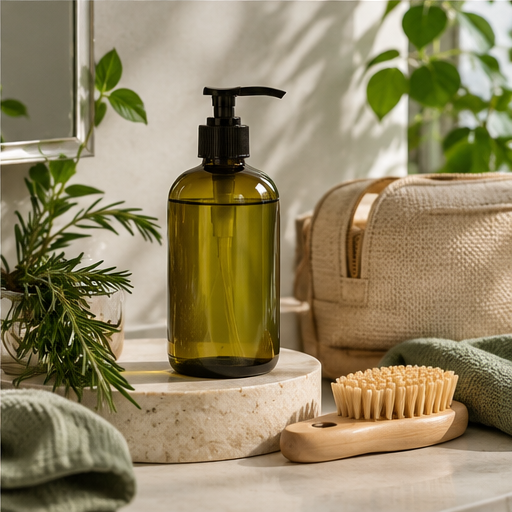
Open a typical bathroom cupboard and you may find an unofficial history of your haircare ambitions. There is the shampoo bought after a promising review, the conditioner saved for special occasions, a nearly empty styling spray and the oil that seemed essential for one week. Each bottle represents a decision made at a different moment, often for a different version of your routine.
Minimalist haircare is not about having the smallest possible number of possessions. It is about giving every product a clear purpose so that your daily habits become easier, more enjoyable and less wasteful. Some people genuinely need several styling and conditioning products. Others can do everything they want with a modest collection. The right shelf is the one that serves your hair rather than the one that photographs best.
Begin With a Shelf Audit, Not a Shopping List
Take everything out and group products by role: cleansing, conditioning, styling, scalp care and occasional extras. Check the packaging for shelf-life or period-after-opening information, and follow any storage guidance. Discard products that are no longer appropriate to use according to their instructions.
Next, identify duplicates. Perhaps you have three shampoos open because each promised a different benefit, or four nearly identical styling creams. There may be good reasons to own several options, but you should be able to explain those reasons in plain language.
Do not automatically throw away usable products. If they suit you, finish them before replacing them. The aim is a more intentional routine, not a dramatic decluttering video followed by another online order.
Map Your Actual Week
A routine built for an imaginary person will not survive a real Monday. Think about how you live. Do you exercise in the morning? Commute in unpredictable weather? Wear a helmet? Style your hair for work? Wash in a shared bathroom with limited shelf space?
Write down your three most common hair moments: a normal workday, a rushed morning and an occasion when you want a more polished result. Those situations should shape your core routine. If you only use a curling tool twice a month, it does not need to define every wash day.
Likewise, a complicated sequence of scalp products may look appealing online but feel unrealistic at six in the morning. Products that fit your schedule are more likely to be used according to their instructions.
Choose a Dependable Cleansing Base
Shampoo is one of the clearest places to simplify because its primary job is straightforward: cleanse the roots and scalp. Look for something compatible with your personal preferences, hair type and washing frequency. You need not chase every trend in foaming agents, fragrance or botanical extracts.
Some people favour traditional botanical formulations. A hair loss shampoo containing Chinese herbal ingredients may interest those shoppers as an everyday cleansing product. The key is to judge how comfortably it fits into a routine, not to expect a shampoo to answer every question about hair density or shedding.
If you use heavy styling products regularly, you may occasionally want a different cleansing approach. That is not a failure of minimalism. A smaller collection can still include specialised items when they genuinely serve a purpose.
Keep Conditioning Where It Is Useful
The second pillar is conditioning. Hair that is long, curly, coloured or regularly styled may benefit from products that improve slip and manageability. Fine hair may prefer a lighter application or less product near the roots. The important point is to tailor the amount and placement rather than assume everyone needs the same routine.
Apply conditioner according to its directions, generally concentrating on the lengths when appropriate. Use enough to help with detangling but not so much that the roots feel unnecessarily coated. If an additional mask is enjoyable and suits your hair, keep it. If it sits unopened for months, question whether it truly belongs on the shelf.
An effective routine leaves room for personal preference. Minimal does not have to mean austere or unpleasant.
Give Every Styling Product a Job Title
A useful exercise is to assign each styling product a specific role. One adds hold; another offers slip during detangling; a third helps achieve a preferred finish. If two products do essentially the same thing, ask which you actually reach for.
Avoid layering products simply because they appeared together in a tutorial. Start with a modest amount, assess the result and add more only if necessary. Too much styling product can leave hair feeling coated and may require more effort at the next wash.
Keep everyday items within easy reach and occasional tools in a separate location. An uncluttered counter reduces the temptation to use whatever happens to be visible.
The One-In, One-Out Rule Has Exceptions
Some people find it helpful to finish a product before opening a replacement. This can reduce waste and make it easier to understand how well a single product suits them. Yet rigid rules can be counterproductive. A person with different protective hairstyles or seasonal needs may legitimately keep a few alternatives.
Think in terms of purpose rather than arbitrary numbers. If an item makes your routine more comfortable, it earns its place. If it creates extra steps without an obvious benefit, reconsider it. Keep a short shopping note so you can distinguish products you genuinely need from products that simply looked appealing during a late-night scroll.
Being selective also gives you more space to appreciate packaging, fragrance and texture when they genuinely enhance the experience.
Traditional Botanicals Without a Ten-Step Ritual
Interest in herbal beauty does not mean you must adopt a lengthy daily ceremony. Traditional Chinese herbal influences can be explored through a straightforward cleanser or a carefully chosen scalp product, while maintaining the rest of your existing routine.
For shoppers who enjoy learning about plant-based approaches, hair growth products provide a starting point for exploring herbal-inspired options. The sensible question is not “How many steps can I add?” but “Which step has a clear role for me?”
Traditional knowledge can enrich the meaning of a personal-care ritual. It should not become pressure to purchase items you do not need or to regard a cosmetic product as a medical treatment.
Make Your Tools Part of the Edit
Bottles are not the only source of bathroom clutter. Brushes, combs, clips, hair ties and styling tools can accumulate rapidly. Sort them by how often you use them and how comfortably they work with your hair.
Remove hair from brushes regularly and clean them as appropriate. Check for rough edges on clips and damaged accessories that may snag strands. Store heated tools safely and follow manufacturer instructions. A single comfortable brush is more useful than several decorative tools that pull at your hair.
If you are keeping a spare set for travel or the gym, store it together. That turns a scattering of duplicates into a practical kit.
A Seven-Day Shelf Experiment
For one week, put your daily essentials in a small tray and leave occasional products in their usual storage. Use only what you need, without deliberately depriving your hair of products that genuinely help. At the end of each day, notice what you reached for and why.
Did you require a leave-in product for detangling? Did you miss a particular scalp-care step? Was a styling cream used out of habit rather than need? Were there mornings when the routine felt easier because fewer choices were visible?
After seven days, reorganise based on what you learnt. You may discover that the perfect number is four products, or you may discover that eight products each have a legitimate purpose. Either result is useful.
Avoid the Minimalism Trap
Sometimes simplifying becomes another form of perfectionism. People feel pressure to use only “clean” products, follow a rigid timetable or buy premium minimalist packaging. None of those requirements is essential to a sensible haircare routine.
Do not discard a product simply because its bottle looks busy or its ingredient list is long. Do not assume a handmade-sounding product is automatically more suitable than a carefully formulated conventional one. And do not measure success by whether your shelf resembles a lifestyle photograph.
The practical aim is less confusion, less waste and more consistency. A shelf that works well but looks ordinary is a successful shelf.
Before you replace anything, photograph the shelf as it is and write down the products you reach for most often. Review the picture after a month. A useful change should show up in daily convenience, not only in a neater-looking cupboard.
The Takeaway
The best haircare edit starts with observation rather than a shopping basket. Identify what you use, understand why it is there and organise products around your real week. Give cleansing, conditioning and styling clear jobs, then let optional extras earn their place. A simpler routine can be generous, flexible and deeply personal without becoming another thing to perfect.
HERBAL HAIR | GUEST ARTICLE