
From Levers to Digital Reels: Evolution of Slots
Walk into any land-based casino, and the first thing you will notice is the bright lights and distinct sounds of slot machines. For decades, these games have served as the cornerstone of the gaming industry. However, the way we interact with these games has undergone a massive transformation. You no longer need to pull a heavy metal lever or feed physical coins into a slot. Instead, high-definition graphics, complex algorithms, and instant accessibility define the modern experience.
Understanding how we transitioned from simple mechanical boxes to sophisticated digital entertainment platforms reveals a lot about technological progress. This article explores the rich history of slot games, the pivotal shift to digital platforms, the impact of mobile technology, and the innovative features that define the games we play right now.
The Early Days of Slot Machines
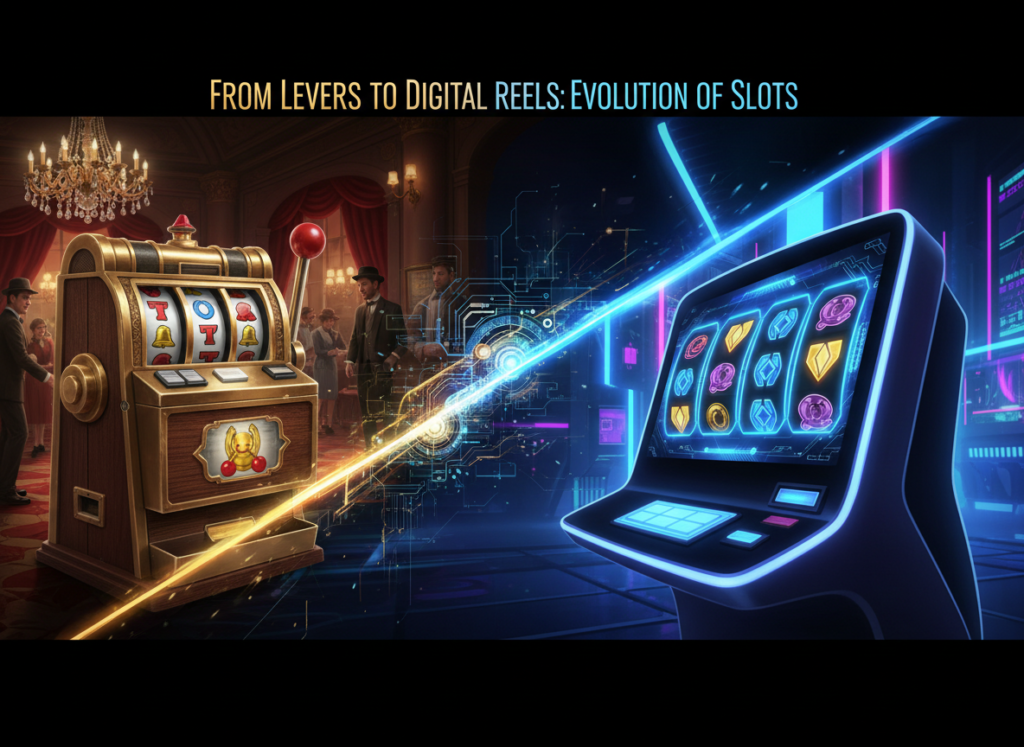
To appreciate the digital games of the present, we must first look at their mechanical ancestors. The story begins in the late 19th century with the invention of the Liberty Bell by Charles Fey. This machine featured three spinning reels and five symbols: horseshoes, diamonds, spades, hearts, and a cracked Liberty Bell. If you lined up three bells, you won the grand prize of fifty cents.
These early machines operated on pure mechanical physics. Players pulled a lever, which stretched a spring inside the machine to spin the reels. The tactile nature of pulling the handle earned these machines the famous nickname “one-armed bandits.” For many years, innovation in this space moved slowly. The next major leap did not occur until the 1960s, when Bally developed the first fully electromechanical slot machine. This invention allowed for automatic payouts and paved the way for more complex multi-coin betting structures.
By the 1970s, video slots began to emerge. These machines replaced physical reels with a screen, causing initial skepticism among players who distrusted the lack of moving parts. Yet, the convenience and potential for diverse game designs eventually won the public over, setting the perfect stage for the internet revolution.
The Shift to the Digital Realm
The mid-1990s brought about the commercialization of the internet, changing countless industries almost overnight. Gaming software developers quickly recognized the potential of this new medium. Antigua and Barbuda passed the Free Trade and Processing Act in 1994, which allowed licenses to be granted to companies wanting to open online casinos. Shortly after, the very first online slot games went live.
Early digital slots closely mimicked their physical counterparts. Developers designed them with three reels and classic symbols like fruits and sevens to give players a sense of familiarity. However, the constraints of physical cabinets no longer held developers back. Computer programming allowed for the introduction of unconventional layouts, multiple paylines, and interactive bonus rounds.
As internet speeds increased and home computers became standard household appliances, the demand for varied and reliable gaming experiences surged. Players sought platforms that offered secure transactions, fair play, and a wide variety of themes. This era saw the rise of foundational digital gaming hubs, laying the groundwork for established modern platforms. Whether you look at early software providers or contemporary portals like , the core mission remains the same: delivering an engaging, seamless experience directly to the user’s screen.
The Rise of Mobile Gaming
If the internet changed where we play, the smartphone changed when we play. The late 2000s and early 2010s marked the explosion of mobile technology. Initially, mobile games were simplistic, constrained by small screens, limited processing power, and sluggish network speeds.
Developers soon adopted HTML5 technology, which served as a massive breakthrough for the industry. Unlike older Flash-based games that required heavy plug-ins and drained battery life, HTML5 allowed games to run smoothly directly within mobile web browsers. This meant you could access your favorite games on any device—be it a desktop, tablet, or smartphone—without losing graphical fidelity or audio quality.
This transition shifted the demographic of slot players. The convenience of playing a quick game during a commute or while waiting in line opened the market to casual gamers. Developers responded by creating “snackable” content—games that load instantly, feature intuitive touchscreen controls, and save progress automatically. Mobile gaming now accounts for the vast majority of online slot traffic, proving that accessibility is just as important as the game design itself.
Modern Innovations and Technologies
Today’s online slot games barely resemble the early digital versions of the 1990s. They are highly complex software applications developed by massive teams of artists, mathematicians, and programmers. Several key technologies drive the modern experience.
Random Number Generators (RNG)
At the heart of every digital slot lies a Random Number Generator. This algorithm ensures that every spin is completely independent and fair. When you press the spin button, the RNG generates thousands of numbers per second. The exact millisecond you click determines the outcome. This technology guarantees that patterns cannot be predicted, maintaining the integrity and excitement of the game.
Immersive Graphics and Themes
Visual storytelling has become a primary focus for game studios. Modern games feature 3D graphics, cinematic animations, and original soundtracks recorded by professional orchestras. Developers license popular movies, television shows, and musical acts to create branded experiences that resonate with fans.
Innovative Game Mechanics
The basic concept of lining up matching symbols still exists, but developers have layered complex mechanics on top. Features like cascading reels, where winning symbols explode and new ones drop into place, allow for multiple consecutive wins on a single spin. Expanding wilds, interactive mini-games, and progressive jackpots keep the gameplay dynamic. As platforms compete for attention, finding a trustworthy site that hosts these advanced games is crucial. Enthusiasts often turn to comprehensive platforms such as QQSLOT to access a curated selection of titles featuring the latest mathematical models and cutting-edge mechanics.
What the Future Holds for Slot Enthusiasts
Technology never stands still, and the developers behind online slots constantly look for the next major trend. Virtual Reality (VR) and Augmented Reality (AR) currently sit at the forefront of this innovation. VR casinos already exist, allowing players to strap on a headset and walk around a fully rendered digital casino floor, interacting with other players and sitting down at 3D slot machines.
Furthermore, the integration of blockchain technology and cryptocurrencies promises to alter how transactions occur. Smart contracts can provide unprecedented transparency regarding payout rates and game fairness, addressing long-standing concerns some players have about digital platforms.
We can also expect Artificial Intelligence to play a larger role in game design. AI algorithms can analyze player preferences in real-time to suggest games, customize bonus offers, and even alter the volatility of a game to match the user’s playing style.
Conclusion
The journey from Charles Fey’s mechanical Liberty Bell to the sophisticated software we use right now highlights an incredible century of technological advancement. Online slot games have evolved from simple amusement devices into a global entertainment powerhouse. By continuously embracing new technologies—from the early internet to smartphones, and now virtual reality—developers ensure these games remain relevant and exciting.
As the industry moves forward, the focus will undoubtedly remain on improving accessibility, enhancing visual immersion, and maintaining fair play. Whether you prefer the nostalgic simplicity of a three-reel classic or the cinematic complexity of a modern video slot, the digital space offers an experience tailored specifically for you. Stay curious about emerging technologies, choose reputable platforms for your entertainment, and enjoy the dynamic evolution of this fascinating industry.