
The Five Main Types of Laser Source
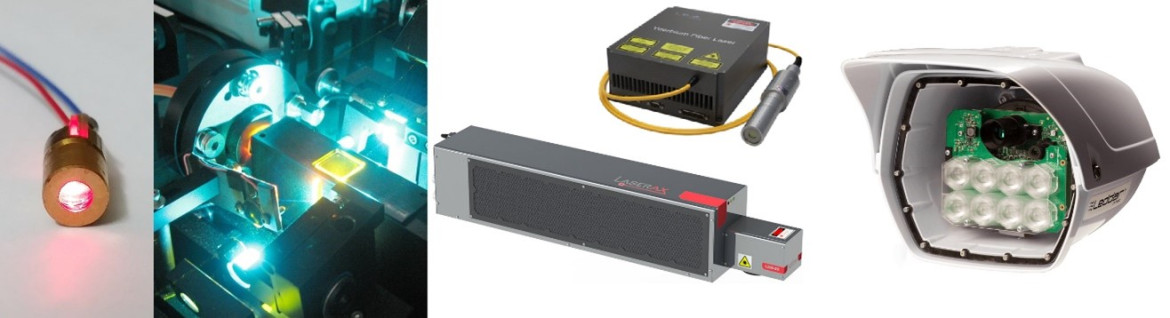
Understanding the different Laser Source options available is crucial for businesses selecting the right technology for their specific applications. The type of Laser Source directly impacts performance, efficiency, cost, and the materials it can process. This article explores the five main types of laser sources, detailing their working principles, common applications, and key characteristics to help you make an informed decision for your B2B needs. We will delve into gas, solid-state, fiber, liquid (dye), and semiconductor lasers.
Understanding the Core Components of a Laser Source
Before examining the specific types, it’s helpful to recall the basic components common to most lasers. A Laser Source typically consists of three main parts:
- Gain Medium: The material (solid, liquid, gas, or semiconductor) that amplifies light when energized. The choice of gain medium fundamentally defines the type of laser and its output wavelength.
- Energy Source (Pump Source): Provides energy to the gain medium to excite its atoms or molecules. This can be an electrical discharge, flashlamps, or even other lasers.
- Optical Resonator: Usually two mirrors—one fully reflective and one partially reflective—that provide feedback, allowing light to oscillate and build intensity before exiting as the laser beam.
Understanding these components provides a solid context for the differences between the main laser types.
1. Gas Laser Source: Powerful and Versatile
Gas lasers were among the first types developed and remain vital in many industrial and medical fields. They utilize a gas or a mixture of gases as their gain medium, making them powerful and capable of processing a wide range of materials.
How Gas Laser Sources Work
These lasers typically use an electrical discharge passed through the gas to excite its atoms or molecules. As the excited gas particles return to a lower energy state, they release photons, initiating the laser amplification process within the resonator.
A prime example is the CO2 Laser Source, one of the most common industrial lasers. It uses a mixture of carbon dioxide, nitrogen, and helium. An electrical current excites the nitrogen molecules, which then efficiently transfer that energy to the CO2 molecules. This leads to the emission of infrared light, typically at a long wavelength of 10.6 micrometers, which is highly effective for processing non-metallic materials.
Common Applications of Gas Laser Sources
Their high power capabilities and specific wavelength make them suitable for:
- Material Processing: Cutting, welding, and engraving materials like wood, acrylics, plastics, textiles, and ceramics. They are also widely used for cutting thick metal sheets.
- Medical Procedures: Their wavelength is strongly absorbed by water, making them ideal for surgical cutting (offering simultaneous cauterization) and skin resurfacing in dermatology.
A prominent real-world example is TRUMPF, a leading manufacturer of industrial machine tools. Their TruLaser series often employs powerful CO2 laser sources for high-speed, high-quality metal sheet cutting in demanding industrial environments, demonstrating the robustness of this technology.
2. Solid-State Laser Source: Precision and Power
Solid-state lasers use a solid crystalline or glass material doped with specific ions (like neodymium, chromium, or ytterbium) as the gain medium. They are valued for their precision and have been a mainstay in manufacturing for decades.
The Mechanism of Solid-State Laser Sources
The solid gain medium, often in the shape of a rod, is typically pumped using high-intensity flashlamps or, more commonly in modern systems, semiconductor diode lasers. The doping ions absorb the pump energy and emit photons at a characteristic wavelength. The Nd:YAG (Neodymium-doped Yttrium Aluminum Garnet) laser is a classic example, emitting near-infrared light at 1.064 micrometers. This shorter wavelength is better absorbed by metals compared to the CO2 laser’s wavelength.
Applications Requiring Solid-State Precision
These lasers are highly valued for their ability to deliver concentrated energy in short pulses, making them ideal for:
- Material Processing: High-precision marking, engraving, welding, and drilling, especially on metals and plastics.
- Medical Uses: Ophthalmology (e.g., LASIK), dermatology (tattoo removal), and various surgical applications.
- Scientific Research: Used in fields like spectroscopy and holography.
It’s important to note that fiber lasers, discussed next, are technically a special sub-category of solid-state lasers but are often treated separately due to their unique structure and distinct advantages.
3. Fiber Laser Source: Efficiency and Reliability
Fiber lasers represent a significant advancement in solid-state laser technology. They use an optical Fiber Laser Source doped with rare-earth elements (like ytterbium or erbium) as both the gain medium and the resonator structure.
Advantages of Fiber Laser Sources
Fiber lasers have gained immense popularity in industrial settings due to several key benefits:
- High Efficiency: They offer excellent wall-plug efficiency, converting electrical energy into light far more effectively than CO2 or traditional solid-state lasers.
- Superior Beam Quality: The light is generated and contained within a fiber, resulting in a highly focused, high-intensity beam perfect for precision work.
- Low Maintenance and High Reliability: The monolithic, solid-state design eliminates the need for mirror alignment and has no moving parts in the laser source itself. This leads to exceptional reliability and long operational life, often exceeding 100,000 hours.
- Compact Size: They have a much smaller footprint compared to traditional solid-state or CO2 lasers of similar power.
Limitations to Consider
Despite their advantages, their higher initial cost can be a barrier compared to CO2 lasers. Furthermore, their near-infrared wavelength makes them less effective for processing certain non-metallic materials like wood and clear plastics, which do not absorb this wavelength well.
IPG Photonics, a leader in fiber laser technology, provides a clear example of their impact. Their high-power fiber laser sources are widely adopted in the automotive industry for welding car bodies and powertrain components. The precision, speed, and reliability of the fiber Laser Source contribute significantly to modern manufacturing efficiency.
4. Liquid (Dye) Laser Source: Tunable Wavelengths
Liquid lasers, commonly known as dye lasers, are a unique category that uses an organic dye dissolved in a liquid solvent as the gain medium. Their defining feature is not power or efficiency, but flexibility.
The Unique Nature of Dye Laser Sources
The primary characteristic of dye lasers is tunability. By changing the dye, its concentration, or the optical cavity setup, the output wavelength can be precisely adjusted over a broad range, typically within the visible spectrum. They are usually pumped by another laser, such as a pulsed Nd:YAG or Argon laser. This tunability allows researchers to match the laser’s output to the specific absorption wavelength of a material or molecule.
Niche Applications for Dye Lasers
Due to this unique spectral flexibility, dye lasers are valuable in specific, highly specialized fields:
- Scientific Research: Spectroscopy, photochemistry, and fluorescence studies.
- Medical Research: Photodynamic therapy (PDT) research, where specific wavelengths are needed to activate light-sensitive drugs.
- Isotope Separation.
While less common in mainstream industrial applications due to their complexity and maintenance needs, their unique capabilities keep them relevant in research environments.
5. Semiconductor (Diode) Laser Source: Compact and Ubiquitous
Semiconductor lasers, or laser diodes, are the most common type of Laser Source produced globally. They are the engine behind much of modern technology, from telecommunications to consumer electronics, thanks to their incredible compactness and efficiency.
Working Principle of Diode Laser Sources
These lasers are based on semiconductor P-N junctions, similar to an LED. When a forward electrical current is applied, electrons and holes recombine at the junction, releasing energy directly in the form of photons. The cleaved facets of the tiny semiconductor chip itself often act as the resonator mirrors. They are renowned for their small size, low power consumption, and high efficiency in direct electricity-to-light conversion.
Widespread Uses of Semiconductor Laser Sources
Their versatility and compact form factor lead to innumerable applications:
- Telecommunications: Transmitting data signals through optical fibers.
- Consumer Electronics: Reading data from CD/DVD/Blu-ray players, laser pointers, and barcode scanners.
- Laser Printing: Acting as the light source to image the drum in printers.
- Pumping: Serving as the highly efficient energy source for most modern solid-state and fiber lasers.
- Industrial: Direct diode laser systems are used for welding plastics, heat treatment, and some metal welding applications.
The function of Blu-ray disc players relies heavily on blue-violet semiconductor laser diodes (typically around 405 nm). This shorter wavelength, compared to the red lasers in DVDs, allows the Laser Source to read much smaller pits on the disc, enabling significantly higher data storage capacity.
Conclusion: Choosing the Right Laser Source for Your Needs
The world of laser technology offers a diverse range of Laser Source options, each with unique strengths. Selecting the optimal one depends heavily on the intended application, materials, budget, and desired outcome.
The choice often involves a trade-off. For instance, CO2 gas lasers offer high-power versatility and excel with non-metals like wood and acrylics, but are generally larger and less efficient than modern alternatives. In contrast, fiber lasers provide exceptional efficiency, reliability, and superior beam quality for processing metals, though at a higher initial cost and with less effectiveness on organic materials. Traditional solid-state lasers, like Nd:YAG, offer a durable balance of precision and power, making them ideal for high-quality marking and engraving. Semiconductor diodes represent the ultimate in compactness and efficiency, dominating consumer electronics and serving as the foundational pump source for other advanced lasers. Finally, the unique wavelength tunability of liquid dye lasers reserves them for specialized scientific and medical research where spectral precision is paramount.
By carefully considering your material requirements, application needs, and operational priorities, you can effectively select the Laser Source that will best drive productivity and innovation in your business operations.