
Why Prop Trading Is Now a Mainstream Online Business
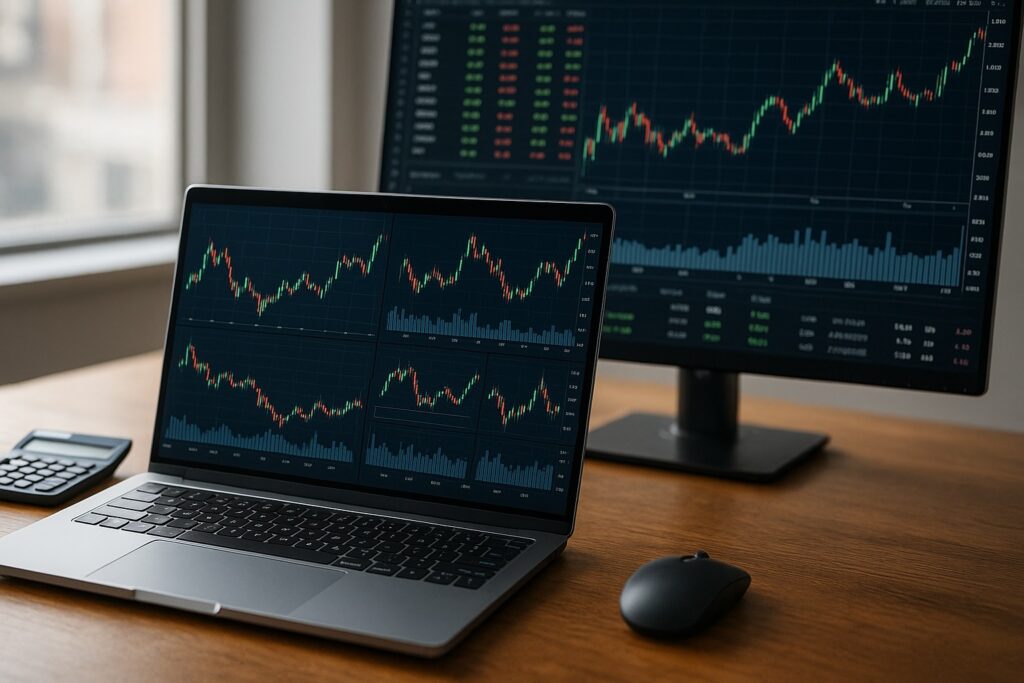
A decade ago, prop trading lived behind closed doors. It was something you’d associate with sharp-suited professionals on institutional desks, using proprietary tools the public never touched. Fast-forward to today, and it has taken on an entirely new identity. What was once a niche corner of the financial world has become a modern online business model – one that thousands of people are exploring from home offices, coworking spaces, and even coffee shops.
Prop trading has quietly become part of the broader digital-business landscape, sitting alongside ecommerce, online consulting, and content creation. It’s accessible, structured, and shaped by performance rather than credentials. People who never considered a trading career now see it as a viable path, not because the markets got easier, but because the infrastructure around prop trading finally caught up with the digital era.
What really pushed it into the mainstream was the rise of prop firms that allow traders to earn access to capital through structured evaluations. For many, the idea that they can work with serious capital – without putting large personal savings at risk – changed the entire equation. Earning a funded account has become the modern equivalent of launching an online business with backing: you provide the skill, and the capital provider supplies the resources.
The shift is bigger than a trend. It represents a redefinition of how people build careers online.
The Digital Transformation of a Once-Exclusive Industry
The catalyst for prop trading’s rise as an online business is simple: tools that were once locked behind institutional walls are now widely available. Platforms became faster, data became cheaper, execution became seamless, and prop firms adopted cloud-based systems that allow traders to work from anywhere in the world.
This changed the nature of the industry. Traders no longer need to sit in a physical office, and firms don’t need to operate costly on-site infrastructure. Everything happens online – from evaluations to risk management to payouts.
Because the entire process is digital, it naturally fits the way modern online businesses operate. The learning phase is digital. The capital access is digital. The work itself is digital. Even community building happens through private groups, live mentorships, and online trading rooms.
The industry evolved faster than anyone expected, and suddenly prop trading wasn’t just another branch of finance. It became an online entrepreneurial path.
Why Prop Trading Fits the Online-Business Mindset
People who run online businesses tend to look for three things: independence, scalability, and skill-based income. Prop trading checks each of those boxes.
1. You can start without large upfront capital
Traditional trading requires personal savings. That barrier kept many talented individuals out of the markets. Prop firms flipped the model. Instead of risking personal funds, traders can earn access to firm capital once they pass their evaluation and demonstrate consistent performance. At that point, they’re effectively operating a trading business backed by someone else’s money.
For people entering the field, this structure feels similar to other online ventures where the main investment is skill development rather than cash.
2. The business scales with your performance
Digital entrepreneurs love models that reward competence rather than seniority. Prop trading aligns perfectly with that mentality. Traders who show consistency are often offered higher capital allocations, better payouts, or access to additional strategies.
There’s no boss, no promotion ladder, no office politics. Scaling depends on your results, not approval from management.
3. It’s a career you can run from anywhere
Remote work reshaped the entire job landscape, and prop trading fits naturally into that shift. Because everything runs online, traders can build a routine that suits their life, whether that means trading morning sessions, focusing on certain market hours, or building hybrid lifestyles that blend trading with other freelance or entrepreneurial work.
It’s flexible, location-independent, and aligned with how today’s workforce wants to operate.
4. Skill becomes the real asset
Online business models that rely on replicable skill sets – like coding, marketing, design, and consulting – tend to attract motivated, self-directed people. Prop trading appeals to the same mindset.
Success depends on strategy, discipline, and emotional control. It rewards deep learning and consistent practice, which is exactly what appeals to modern learners who prefer hands-on skill building over formal credentials.
The Rise of the Online Prop Firm Ecosystem
What really pushed prop trading into the mainstream was the evolution of the prop firm ecosystem itself. Firms today operate more like tech-enabled financial platforms than traditional trading houses. Their business models are built around accessible evaluations, transparent rules, and trader-friendly payout structures.
This created an environment where thousands of aspiring traders could participate in markets that were once unreachable. The online ecosystem has several key components:
Digital evaluations
Traders can prove their abilities through structured challenges. These evaluations are designed to test consistency, risk control, and strategy execution. They’re fair, repeatable, and accessible from anywhere.
Community and mentorship
Modern prop firms grew alongside digital trading communities. People learn together, share insights, and collaborate on strategy development. The sense of connection makes the journey less lonely and more structured than old-school retail trading.
Fast payouts and automation
Online prop firms operate with modern payment systems that allow traders to receive payouts quickly, often in days rather than weeks. This fluidity makes the business feel more like a real online operation – quick inputs, quick outputs.
Global accessibility
The UK, Europe, Southeast Asia, and North America all contribute to the current ecosystem. A trader in Liverpool can compete with someone in Dubai or Toronto under the same rules and evaluation criteria.
This equal access is part of what makes prop trading feel like an online business rather than an old-world financial niche.
From Side Hustle to Serious Business Model
Many people begin prop trading as a side pursuit. They study in the evenings, test strategies on weekends, and explore evaluations when their schedules allow. But unlike many side hustles, prop trading has the potential to grow into a full-time business.
The transition happens for several reasons:
1. It offers structured income potential
While trading will always involve risk, the modern structure of evaluations, scaling plans, and risk parameters makes the path far more sustainable than the old retail trading style.
2. Results compound
As traders refine their strategies, their performance becomes more predictable. With time and practice, profitable routines emerge, making income more stable and scalable.
3. It integrates well with other online ventures
Many people blend prop trading with content creation, coaching, ecommerce, or freelancing. Because the time demands are flexible, it fits well into multi-stream online business lifestyles.
4. It attracts long-term thinkers
Unlike the gig economy, prop trading requires serious skill development. This naturally draws people who enjoy long-term mastery, and they treat it like a business rather than a hobby.
Why More UK Traders Are Embracing the Prop Model
The UK is experiencing a clear wave of interest in prop trading. Several factors are driving this surge:
- The financial culture is well-developed, and people feel comfortable with trading concepts.
- Remote work is now widely accepted, making unconventional careers easier to pursue.
- Living costs push people toward additional income opportunities, and trading appears accessible.
- The UK has a strong online education market, giving aspiring traders plenty of resources.
But the biggest reason prop trading is going mainstream in the UK is the simplicity of the model: show consistent performance, follow risk rules, manage your emotions, and build a track record.
The clarity makes it feel less like speculation and more like a structured online business.
The Psychological Shift: Trading as a Digital Skill, Not Gambling
One of the most important changes behind prop trading’s mainstream acceptance is the shift in how people view the activity itself. Years ago, trading was often lumped together with gambling or speculative investing. That perception is fading fast.
Today, traders treat their skill development the same way programmers treat coding bootcamps, marketers treat paid-ads mastery, or designers treat portfolio building. It’s a craft.
People study chart patterns, risk management, and macroeconomic movements with the same dedication that online entrepreneurs apply to any other discipline. The mindset has shifted from “fast money” to “professional skill.”
This is one of the biggest reasons prop trading has become an accepted online business rather than a fringe activity.
The Importance of Structure: Why the Prop Model Works
The online business world is full of ventures that fail because they lack structure. Prop trading avoids that problem through built-in rules that promote discipline and protect both the trader and the firm.
Risk parameters
Daily drawdown limits, max loss boundaries, and consistency rules force traders to behave responsibly.
Scaling models
Traders have clear pathways to increased capital as their performance improves.
Routine and accountability
Because trading requires preparation, journaling, and strategy refinement, it naturally fosters the habits successful entrepreneurs rely on.
Defined performance expectations
Unlike the retail world, prop traders know exactly what metrics matter: consistency, risk control, and psychological discipline.
This structure turns trading into a repeatable business model rather than a speculative pastime.
A New Type of Online Business Owner
What’s emerging now is a hybrid professional: part trader, part digital entrepreneur, part strategist. These individuals treat the market like a business partner rather than a casino. They build routines, track metrics, analyze data, and improve their decision-making over time.
Prop trading gives them:
- independence
- scalable opportunities
- control over time
- measurable growth
- location freedom
- a clear performance-based structure
These are the same qualities that made online business so appealing in the first place.
So, Is Prop Trading Truly Mainstream?
Yes – and no.
Prop trading is still new enough that many people haven’t heard of it. At the same time, it’s established enough that thousands of traders across the world already rely on it as a serious income model. It’s becoming a recognized part of the online business ecosystem, building the same characteristics that helped other digital industries go mainstream.
More importantly, it has given people a different way to take part in the financial markets – a way that doesn’t require large personal capital, formal credentials, or traditional employment.
And that’s why it’s taking off.
Today, getting started is as simple as choosing a strategy, committing to the learning process, and proving your skills through a prop firm evaluation. Perform well, earn a funded account, and suddenly you’re operating a legitimate online business built on discipline and strategic thinking.
With each passing year, prop trading becomes less of a secret and more of a structured, respected digital profession. And as the online business world continues to expand, it’s easy to see why this once-exclusive sector has finally entered the mainstream.