
Countertop Blenders Versus Immersion Models: Which Fits Your Lifestyle
The blender category splits into two fundamentally different approaches, each excelling in distinct scenarios while struggling with tasks the other handles effortlessly. Traditional countertop units with their heavy bases and tall pitcher containers dominate kitchen counters worldwide, promising versatility through powerful motors and large capacities. Meanwhile, handheld immersion blenders offer portability and direct-in-pot convenience, eliminating transfers and extra dishes while occupying minimal storage space.
Neither design universally outperforms the other—the “better” choice depends entirely on how you actually cook, what recipes you prepare most frequently, and how much kitchen real estate you can dedicate to appliances. Understanding where each blender type excels and where it disappoints helps you invest in the right tool rather than the most popular or heavily marketed option. For many households, the answer involves recognizing that a countertop blender and immersion model serve complementary rather than overlapping roles.
Power and Performance Differences
Countertop blenders typically house motors ranging from three hundred to over fifteen hundred watts, with the substantial base providing space for larger motors, cooling systems, and stable platforms for high-speed operation. This power advantage becomes most apparent when pulverizing ice, grinding nuts into butter, or processing frozen fruits into smoothies—tasks demanding sustained torque that would overwhelm smaller motors.
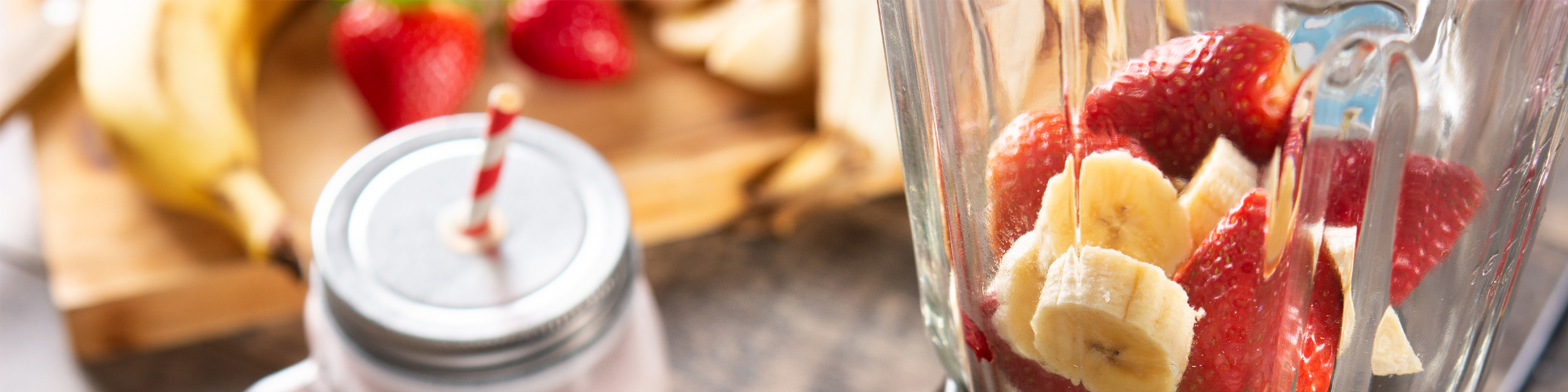
The sealed pitcher design of countertop models creates a vortex effect, continuously circulating ingredients back toward the blades for consistent processing. This self-feeding action handles large batches efficiently without requiring you to manually guide ingredients toward cutting edges. Multi-tiered blade assemblies attack ingredients from different angles simultaneously, reducing processing time and improving texture uniformity.
Immersion blenders, constrained by handheld ergonomics, typically offer two hundred to five hundred watts—adequate for soups, smoothies, and soft ingredients but struggling with dense or frozen materials. Their single-plane blade design lacks the multi-level attack of pitcher blenders, while the open processing environment prevents vortex formation. However, this apparent limitation becomes an advantage when blending hot soups directly in cooking pots, where immersion models work safely while countertop pitchers risk thermal shock or dangerous steam buildup.
Capacity and Batch Size Considerations
Standard countertop blender pitchers hold forty to seventy ounces, easily accommodating family-sized smoothie batches, party-sized margaritas, or multiple servings of soup requiring blending. The pitcher’s graduated markings simplify measuring and recipe following, while the large capacity means fewer batches when preparing bulk recipes for meal prep or entertaining.
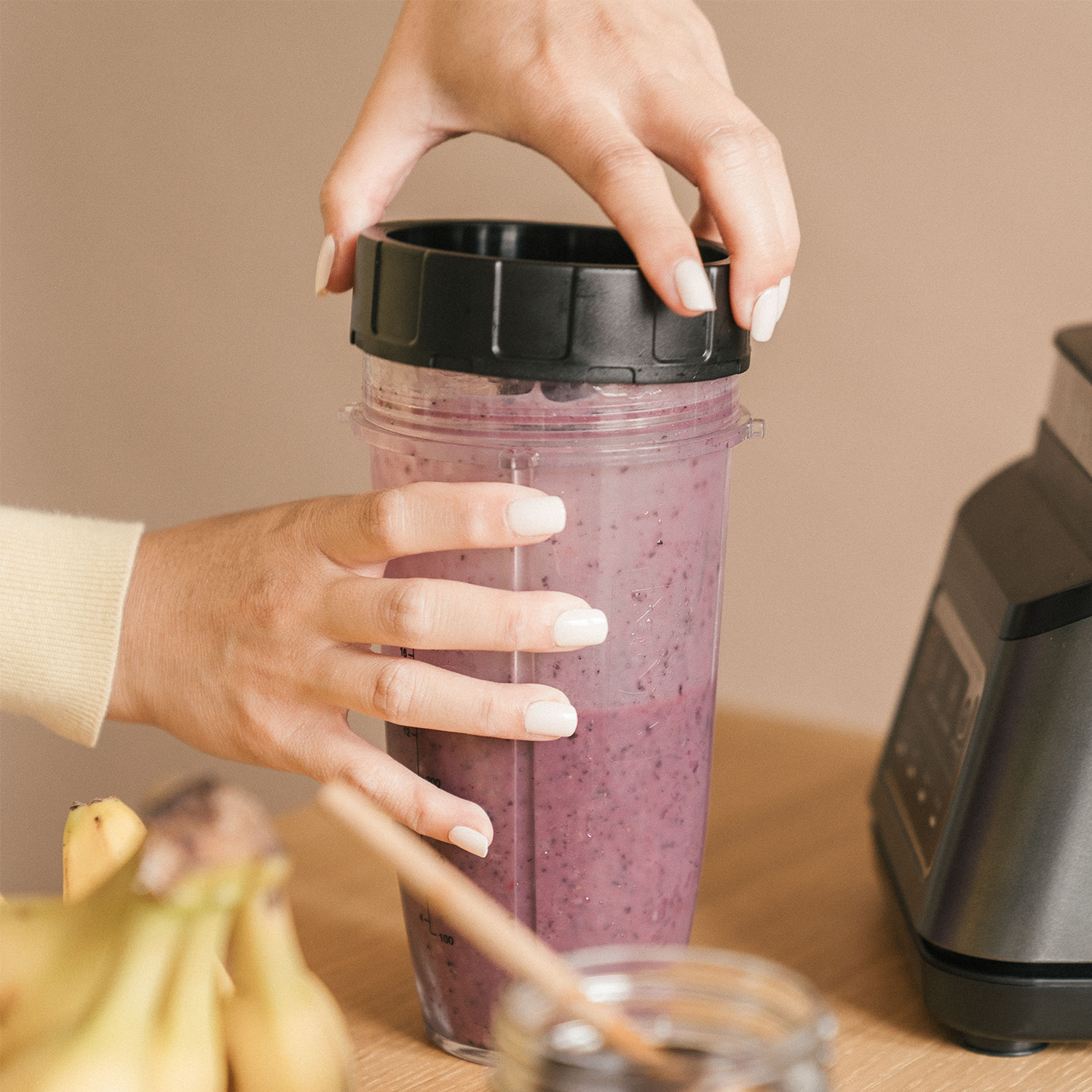
This capacity advantage reverses for small portions. Processing a single serving of smoothie or a cup of sauce in a sixty-ounce pitcher often results in ingredients spattering up the walls, never reaching the blades, requiring you to stop repeatedly and scrape down the sides. Many manufacturers address this with personal blender cups that attach to the same base, but this adds storage requirements and cleaning tasks.
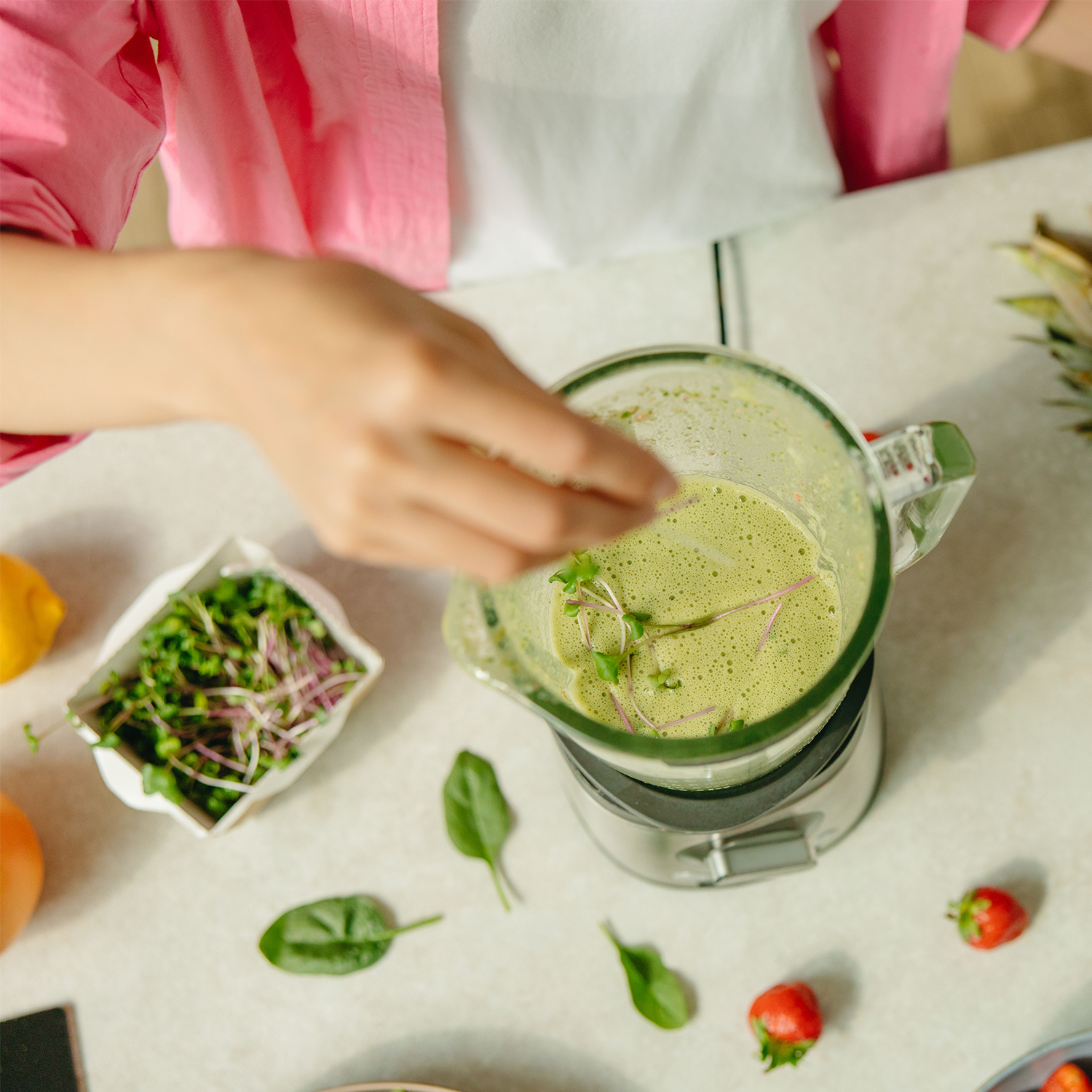
Immersion blenders process whatever quantity your pot, bowl, or cup contains, scaling effortlessly from single-serving smoothies to full stockpots of soup. This flexibility eliminates the “too small” problem plaguing countertop models, though very large batches require more time since you’re manually moving the blender through ingredients rather than letting a vortex do the work. SHARDOR immersion models with ergonomic grips reduce fatigue during extended blending of larger volumes.
Cleanup and Maintenance Demands
Cleaning countertop blenders involves disassembling multi-part pitcher systems—base, gasket, blade assembly, lid, and feed cap—each requiring individual attention. Blade assemblies with gaskets trap food particles in hard-to-reach crevices, demanding careful scrubbing to prevent bacterial growth and odors. While many components claim dishwasher safety, blade sharpness and gasket integrity often suffer from repeated high-heat exposure, leading experienced users to hand-wash these parts.
The popular “self-cleaning” technique—filling the pitcher partway with water and a drop of dish soap, then running on high—works reasonably well for routine cleanup after smoothies or shakes. However, sticky ingredients like nut butters, thick sauces, or fibrous vegetables require manual scrubbing regardless. The pitcher’s height and blade positioning make reaching the bottom challenging without dedicated bottle brushes, while textured pitcher interiors designed to enhance blending create cleaning headaches with their countless crevices.
Immersion blenders simplify cleanup dramatically. Most detachable blending shafts rinse clean under running water in seconds, with the self-cleaning trick—pulsing in a container of soapy water—removing stubborn residue effectively. The simple, open design lacks gaskets, hidden crevices, or hard-to-reach areas where food hides. Total cleanup time often measures in seconds rather than minutes, encouraging more frequent use since the post-blending hassle virtually disappears.
Storage Space Requirements
Countertop blenders demand significant real estate, whether left permanently on counters or stored in cabinets. The base alone occupies substantial footprint, while the tall pitcher requires vertical clearance often exceeding sixteen inches. Households with limited counter space face difficult choices about which appliances earn permanent positions versus being stored and retrieved for each use—and appliances requiring retrieval get used less frequently regardless of capability.
Immersion blenders store in drawers, hang on hooks, or tuck into narrow cabinet spaces, taking up less room than many manual kitchen tools. This minimal footprint makes them ideal for small kitchens, apartment living, or situations where counter and cabinet space comes at a premium. The storage advantage extends beyond just size—being able to grab the blender from a drawer in two seconds versus retrieving a countertop unit from a lower cabinet, assembling it, and finding counter space significantly reduces the activation energy required to actually use the tool.
Recipe Versatility and Limitations
Countertop blenders excel at applications requiring sustained power, sealed processing environments, or precise liquid ratios. Smoothies with frozen fruit or ice, nut and seed butters, frozen desserts, crushed ice for cocktails, and flour grinding all favor countertop models. The pitcher design also proves essential for recipes requiring slow ingredient addition through the feed cap while blending continues, like emulsifying mayonnaise or creating smooth salad dressings.
Hot soup preparation reveals a significant countertop limitation—you must cook ingredients, transfer them to the blender, process carefully to avoid steam pressure explosions, then transfer back to the pot or serving container. This creates extra dishes, cooling delays, and splatter hazards. Some high-end models include heating elements that cook ingredients directly in the pitcher, but these represent substantial investments and still require serving transfers.
Immersion blenders transform soup making by processing directly in the cooking pot, eliminating transfers entirely. This applies equally to making mashed potatoes, pureeing baby food, or creating smooth pasta sauces—any scenario where ingredients start in a pot and ideally stay there. The handheld format also enables working in unconventional containers: blending smoothies directly in drinking glasses, making single-serving salad dressings in small jars, or processing ingredients in mixing bowls during recipe preparation.
Safety Considerations
Countertop blenders incorporate safety interlocks preventing operation unless the pitcher seats correctly and the lid locks in place, protecting users from spinning blades and flying ingredients. However, the enclosed design creates its own hazards—blending hot liquids can cause dangerous steam pressure buildup, and removing lids too quickly after processing hot contents risks scalding splashes. Users must remember to start on low speeds with hot ingredients, vent the lid, and wait for pressure to equalize before opening.
The substantial weight and bottom-heavy design prevent tipping during operation, while suction feet keep the base planted firmly on counters even during aggressive blending. However, this stability creates a different risk—reaching into tall pitchers to scrape sides or remove ingredients brings hands dangerously close to sharp blades. Even with the blender unplugged, accidental blade contact during cleaning causes numerous kitchen injuries annually.
Immersion blenders present exposed blades requiring conscious respect during operation and cleaning. The handheld nature means you’re holding the motor directly, and any loss of grip or unexpected movement could cause the spinning blades to contact hands, splash hot liquids, or damage cookware. Quality immersion models include safety switches requiring two-handed activation—one hand gripping the handle while the other presses a trigger—preventing accidental startup while also making single-handed operation impossible, which some users find frustrating.
Cost and Value Analysis
Entry-level countertop blenders start around thirty dollars, delivering adequate performance for basic smoothies and soft ingredient blending but typically struggling with ice, frozen fruit, or extended use. Mid-range models from fifty to one hundred fifty dollars offer substantially better motors, more durable construction, and useful features like preset programs or variable speed control. Premium models exceeding two hundred dollars promise commercial-grade power, advanced blade designs, and longevity measured in decades rather than years.
Immersion blenders span a similar but compressed price range, with basic models starting around twenty dollars and premium options rarely exceeding one hundred dollars. The lower ceiling reflects simpler mechanics and smaller motors, but also means that spending sixty dollars on an immersion blender gets you closer to the category’s best rather than settling for mid-tier compromises. Attachment ecosystems—whisk attachments, chopper bowls, blending cups—add functionality and value, effectively turning a single purchase into multiple kitchen tools.
For budget-conscious households, immersion blenders offer better value when considering capability per dollar and versatility across common cooking tasks. However, they cannot replace countertop models for specific applications like frozen drink preparation or nut butter production. Conversely, spending hundreds on a premium countertop blender makes little sense if your primary need involves pureeing soups and making single-serving smoothies. Match investment level to actual usage patterns rather than aspirational cooking goals or impressive-sounding specifications.
Choosing Based on Real Needs
The countertop versus immersion decision ultimately hinges on which appliance’s strengths align with your actual cooking patterns and which limitations you can accept or work around. Countertop blenders suit households prioritizing frozen drinks, bulk smoothie preparation, nut butters, and applications demanding maximum power. Immersion blenders serve those valuing convenience, space efficiency, and direct-in-pot processing for soups, sauces, and small-batch blending.
Many serious home cooks eventually conclude they benefit from owning both—a countertop model for power-intensive tasks and batch preparation, plus an immersion blender for everyday convenience and hot soup processing. This dual approach costs less than a single premium countertop blender while providing greater flexibility. However, if budget or space forces choosing one, let your most frequent recipes guide the decision: frozen smoothie enthusiasts need countertop power, while soup lovers and small-batch preparers will reach for immersion models repeatedly.