
A Southern Hemisphere Legacy
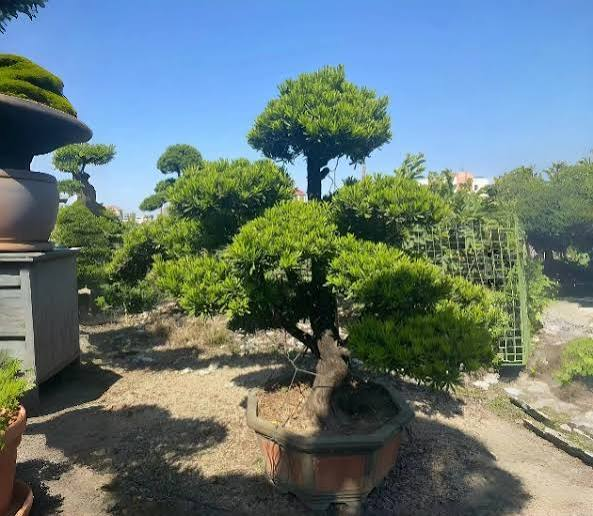
Most conifers people know, pines, spruces, firs, and cedars, belong to the family Pinaceae, which evolved in the northern hemisphere. Podocarpus belongs to a different lineage entirely, one that originated in the ancient supercontinent of Gondwana and still dominates the conifer flora of the southern hemisphere. Australia, New Zealand, South Africa, and South America all have native podocarp species. Podocarpus macrophyllus, the species known as Buddhist pine, is one of the few that pushed northward into East Asia, where it found a foothold in southern Japan, Taiwan, and coastal China.
This Gondwanan origin explains several of the tree’s quirks. It does not produce cones in the way pines do. Instead, it produces fleshy, berry-like structures that attract birds, which then disperse the seeds. This is a strategy more common in flowering plants than in conifers, and it reflects the tree’s long coevolution with fruit-eating animals in the southern forests where its ancestors evolved.
Why the Name “Buddhist Pine” Stuck
The association with Buddhism is not incidental. In China and Japan, the tree was planted in temple courtyards for centuries, where its slow growth, evergreen foliage, and tolerance for pruning made it an ideal symbol of endurance and contemplation. Monks valued it for its ability to thrive in the confined, often shaded conditions of temple grounds, and its dense habit provided structure and greenery through every season.
The Chinese name luóhàn sōng ties the tree directly to Buddhist iconography. Luóhàn refers to arhats, enlightened beings who have achieved liberation from the cycle of rebirth. The tree’s fruit, with its round seed perched atop a red, fleshy receptacle, was seen as a miniature representation of an arhat seated in meditation. This poetic association cemented the tree’s place in religious and cultural life, and it remains one of the most recognizable symbols of Buddhist garden design.
The Tree’s Unusual Adaptability
What sets podocarpus buddhist pine apart from most conifers is its tolerance for conditions that would kill a pine or spruce. It grows in full sun and in deep shade. It tolerates drought and brief flooding. It survives in sandy coastal soils and in heavy clay, provided drainage is adequate. It resists salt spray, air pollution, and most pests and diseases. It can be grown in the ground or in a container for decades.
This adaptability is why the tree has become a staple of urban landscaping in warm climates. In Florida, Texas, and California, it is used for hedges, screens, topiaries, and street trees. In cooler regions, it is grown as a houseplant or conservatory specimen. Few conifers offer this kind of flexibility, and even fewer combine it with such a refined, formal appearance.
Growing It as a Bonsai
Podocarpus is one of the most rewarding conifers for bonsai cultivation, particularly for growers in warm climates where traditional cold-hardy species struggle. Its needles are shorter than those of most pines, and its growth habit is naturally compact, meaning it develops the appearance of age more quickly than many other species. The trunk thickens steadily, the bark becomes fissured and textured, and the branches respond well to wiring and pruning.
One advantage of Podocarpus as bonsai is its ability to back-bud on old wood. Many conifers will not produce new growth from bare branches, which limits how aggressively they can be pruned. Podocarpus will push new buds from older wood, giving growers more options for restructuring a tree. This trait, combined with its tolerance for root pruning and its ability to thrive in small containers, makes it an excellent choice for both beginners and experienced bonsai artists.
What to Watch For
The tree has few serious problems, but there are a few things growers should keep in mind. The most common issue is root rot from overwatering, particularly in containers. Podocarpus prefers soil that drains freely and will decline quickly if its roots stay wet for extended periods. Allowing the soil to dry slightly between waterings is the safest approach.
Another consideration is cold tolerance. While the tree can survive brief dips into the upper twenties Fahrenheit, prolonged freezing temperatures will damage or kill it. In marginal climates, planting against a south-facing wall or growing in a container that can be moved indoors during cold snaps is advisable.
Finally, the seeds are toxic if ingested, though the fleshy red aril surrounding them is edible. Growers with small children or pets should be aware of this when choosing where to place the tree.
A Tree Worth the Patience
Podocarpus macrophyllus is not a fast-growing tree. It will not fill a space in a single season, and it will not reward impatience. What it offers instead is longevity, adaptability, and a quiet, formal beauty that improves with age. Whether grown as a hedge, a specimen, a container plant, or a bonsai, it rewards the grower who is willing to wait. That patience, in the end, is what the Buddhist pine has always been about.