
NVIDIA Jetson Thor: Reshaping Emerging Industries Through Unprecedented Edge AI Power
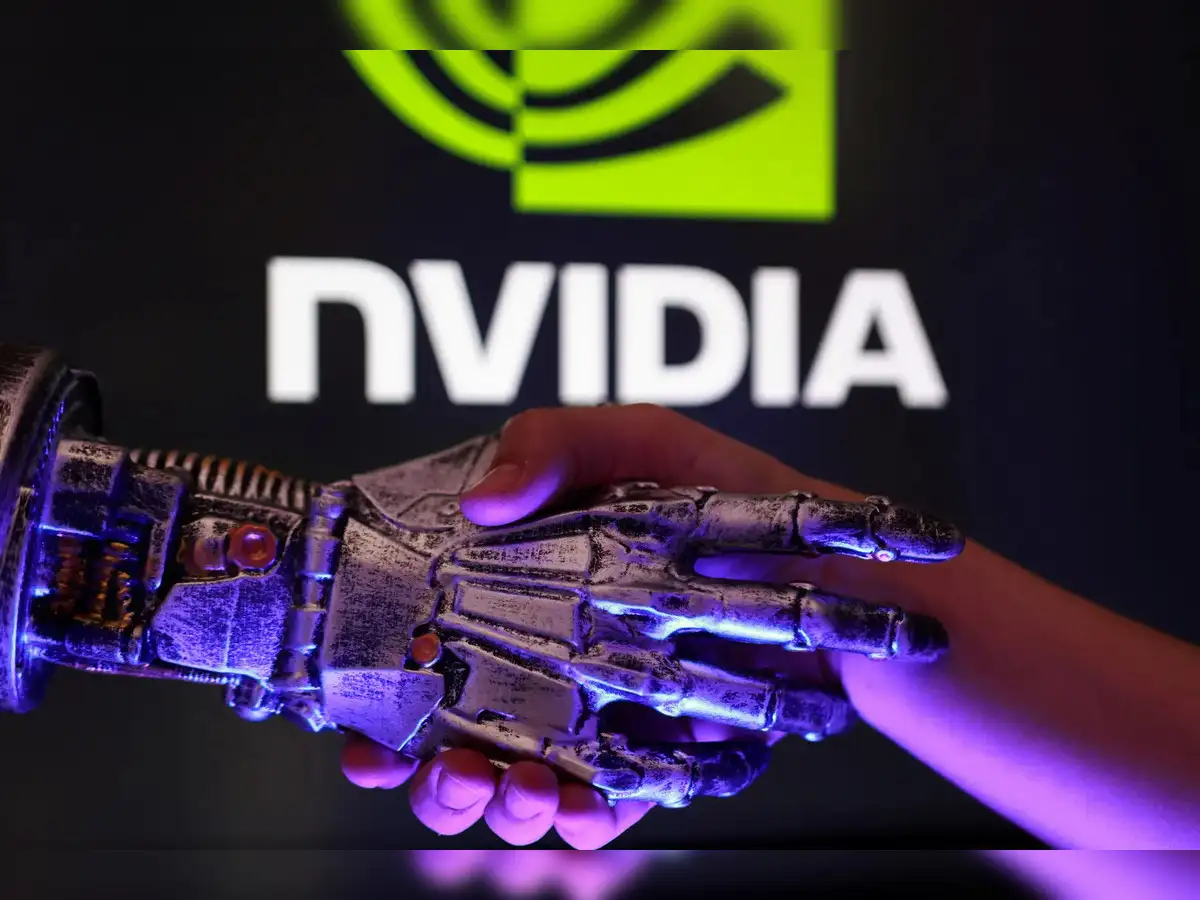
In the landscape of edge artificial intelligence (AI) computing, NVIDIA’s Jetson Thor has emerged as a transformative force, redefining the boundaries of what intelligent devices can achieve. Powered by the NVIDIA Blackwell architecture, this robotic computer delivers a staggering 2,070 FP4 TFLOPS of computing power, marking a 7.5x increase in AI performance, 3.1x faster CPU speeds, and double the memory compared to its predecessor, the Jetson Orin. This quantum leap in performance is not merely a technical upgrade—it is a catalyst that is unlocking new possibilities across a spectrum of emerging industries, from humanoid robotics to precision healthcare and smart agriculture. By enabling real-time, on-device inference for complex AI models while minimizing cloud dependency, Jetson Thor is accelerating the transition from experimental AI to practical, scalable commercial applications.
Humanoid Robotics: From Lab Prototypes to Industrial Workhorses
The most profound impact of Jetson Thor is evident in the field of humanoid robotics, where the demand for high-performance, low-latency computing has long been a bottleneck. Traditional robotic systems struggled to process multi-sensor data streams—from cameras, lidars, and radars—quickly enough to navigate unstructured environments or perform delicate tasks in real time. Jetson Thor’s edge computing capabilities have shattered this barrier, enabling humanoid robots to evolve from research curiosities into viable industrial tools.
Industry leaders are already leveraging this technology to redefine operational efficiency. Agility Robotics, a pioneer in humanoid robotics, has integrated Jetson platforms into its fifth-generation Digit robot and plans to adopt Jetson Thor for its sixth-generation model. Digit, which is already deployed commercially in warehouses and manufacturing facilities for stacking, loading, and pallet shipping, will gain enhanced real-time perception and decision-making abilities with Thor’s upgrade. “Jetson Thor provides powerful edge processing that will take Digit to the next level—with greater real-time adaptability and expanded capabilities for more complex tasks,” noted Peggy Johnson, CEO of Agility Robotics. “It allows us to implement the latest advances in physical AI to help customers optimize warehouse and factory operations.”
Boston Dynamics, renowned for its cutting-edge Atlas robot, is also integrating Jetson Thor to bring server-grade computing power directly to its humanoid platform. This enables Atlas to run complex AI workloads, process high-bandwidth data, and access large memory reserves on-device—capabilities that were once confined to data centers. The result is a robot capable of performing increasingly sophisticated manipulative tasks in dynamic environments, from industrial assembly to disaster response.
Healthcare and Emergency Response: Precision and Speed at the Edge
In healthcare, where split-second decisions can mean the difference between life and death, Jetson Thor’s real-time AI processing is revolutionizing patient care and emergency response. The platform’s ability to fuse data from multiple sensors with ultra-low latency makes it ideal for applications such as surgical assistance, medical triage, and search-and-rescue operations—areas where cloud-based computing would introduce prohibitive delays.
Research institutions are at the forefront of this innovation. Carnegie Mellon University’s Robotics Institute, for example, uses NVIDIA Jetson-powered autonomous robots to navigate complex, unstructured environments for medical triage and search-and-rescue missions. Sebastian Scherer, Assistant Research Professor and Director of AirLab at Carnegie Mellon, emphasized the transformative nature of improved computing power: “Our capabilities are limited by available computing resources. Years ago, there was a critical gap between computer vision and robotics because computer vision workloads were too slow for real-time decision-making. Today, with faster models and computing, robots can handle far more delicate tasks.” The university plans to upgrade its existing Jetson AGX Orin systems to Jetson AGX Thor, expecting significant improvements in sensor fusion and the ability to manage robot swarms—key enhancements for large-scale emergency response operations.
Jetson Thor also powers intelligent operating rooms, where it processes real-time camera feeds and sensor data to guide surgeons during procedures. Leveraging NVIDIA’s Holoscan platform for sensor processing, the system can integrate data from medical imaging devices, surgical robots, and patient monitors to provide real-time insights, reducing human error and improving surgical outcomes.
Agriculture and Logistics: Autonomy Reimagined
Beyond robotics and healthcare, Jetson Thor is driving innovation in industries critical to global infrastructure, including agriculture and logistics. In smart agriculture, the platform enables autonomous “smart tractors” and drones to process on-field sensor data—such as soil moisture levels, crop health indicators, and pest infestations—in real time. This allows for precision farming practices that reduce resource waste, increase crop yields, and lower operational costs.
In logistics, delivery robots and autonomous material-handling systems benefit from Thor’s ability to run large transformer models and vision-language-action (VLA) models on-device. These models enable robots to understand natural language commands, interpret complex environments (such as crowded city sidewalks or busy warehouse floors), and adapt to unexpected obstacles without relying on constant cloud connectivity. For example, delivery robots equipped with Jetson Thor can adjust their routes in real time based on traffic conditions, weather, or pedestrian activity, significantly improving delivery efficiency and reliability.
Ecosystem Enablement: Lowering Barriers to Innovation
A key factor in Jetson Thor’s industry impact is its robust ecosystem of software and hardware partners, which lowers barriers to adoption for developers and enterprises. The platform runs NVIDIA’s full AI software stack, including Isaac for robotics, Metropolis for video analytics AI agents, and Holoscan for sensor processing—tools that streamline the development and deployment of complex AI applications.
This ecosystem includes hundreds of hardware partners such as Advantech, ConnectTech, and Miwen Dynamics, which are building production-ready Jetson Thor systems with customizable I/O and configurations. Sensor and actuator companies like Analog Devices, Intel RealSense, and Leopard Imaging are leveraging the NVIDIA Holoscan Sensor Bridge to simplify sensor fusion, connecting camera, radar, and lidar data directly to Thor’s GPU memory with ultra-low latency. Meanwhile, thousands of software companies—including Openzeka, Robotnix, and Vaidio—are using Thor to enhance traditional visual AI and robotics applications with multi-agent AI workflows.
The platform’s support for popular generative AI frameworks and models—such as Llama, Gemini, Qwen, and robotics-specific models like Isaac GR00T N1.5—empowers developers to experiment and deploy cutting-edge AI without specialized expertise. With over 2 million developers already using NVIDIA technologies to accelerate robotics workflows, this ecosystem is fostering rapid innovation across industries.
Challenges and Future Outlook
Despite its transformative potential, Jetson Thor faces challenges to widespread adoption, particularly around cost and integration. The developer kit starts at $3,499, and production modules cost $2,999 for orders of 1,000 units—prices that may be prohibitive for small and medium-sized enterprises (SMEs) or early-stage startups. However, as production scales and competition increases, these costs are likely to decrease over time.
Looking ahead, Jetson Thor’s impact is poised to expand as software updates unlock even greater throughput and responsiveness, supported by NVIDIA’s CUDA ecosystem. Academic institutions—including Stanford, Carnegie Mellon, and the University of Zurich—are already using Thor to push the boundaries of perception, planning, and navigation models, hinting at future applications such as autonomous underwater robots, space exploration rovers, and personalized service robots.
Conclusion
NVIDIA Jetson Thor represents more than a new computing platform—it is a cornerstone of the next industrial revolution, where physical AI agents operate seamlessly in the real world. By delivering unprecedented edge computing power, supporting complex AI models, and fostering a robust ecosystem, Thor is transforming humanoid robotics from experimental prototypes to industrial workhorses, redefining precision in healthcare, and enabling autonomy in agriculture and logistics. As developers and enterprises continue to harness its capabilities, Jetson Thor will undoubtedly play a central role in shaping the future of emerging industries, turning once-futuristic concepts into everyday realities.
Twowin technology, founded in 2011 which is the preferred NPN Elite partner of Nvidia and specializes in edge computing AI solutions.
If you need to wholesale NVIDIA Thor developer kits, please contact us.
Whatsapp:+86 15889570076
Web:twowintech.com
Email:[email protected]