Reward Model Training: Building a Model That Predicts Human Preference Scores for Text
Modern generative systems can produce fluent text, but “fluent” is not the same as “helpful”, “safe”, or “aligned with what people actually want”. That gap is one reason reward models exist. A reward model is trained to predict which of two (or more) candidate responses a human would prefer, turning subjective judgement into a measurable signal. Once you can score outputs reliably, you can optimise a language model towards better behaviour using reinforcement learning or other preference-optimisation methods. If you are exploring generative ai training in Hyderabad, understanding reward model training is a practical step towards building systems that move beyond generic text and towards consistent, high-quality responses.
What a Reward Model Really Learns
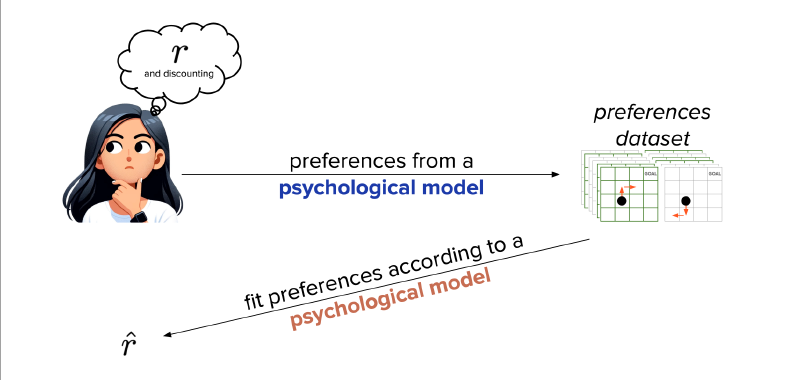
A reward model does not “understand” correctness in a strict mathematical sense. It learns patterns that correlate with human preference. Those preferences are usually captured through comparisons such as:
- Response A vs Response B: which is better?
- Ranking: order multiple responses from best to worst
- Scalar ratings: give a score (often less reliable than pairwise comparisons)
Pairwise comparisons are common because they reduce ambiguity. Humans often find it easier to choose the better option than to assign an absolute score. The reward model learns a function that maps (prompt, response) → reward score, where higher means “more likely to be preferred”.
Collecting Preference Data That Is Actually Useful
The quality of a reward model depends heavily on the quality of preference data. The typical workflow looks like this:
- Prompt sampling: Choose prompts that represent real user needs (customer support, analytics explanations, marketing drafts, coding help, and so on).
- Candidate generation: Produce multiple responses per prompt using a base language model (with variation in temperature, style, length, and reasoning detail).
- Human labelling: Ask annotators to pick the best response or rank responses using clear guidelines.
Guidelines matter. Without them, “preference” becomes inconsistent. A good rubric explains what “better” means: factual accuracy, clarity, completeness, safety, tone, and policy compliance. It should also describe what to avoid, such as hallucinations, privacy violations, or overconfident claims. Teams doing generative ai training in Hyderabad often see faster progress when they invest early in strong rubrics and periodic calibration sessions for annotators.
Training Approach: From Comparisons to a Reward Function
Most reward models are trained using a pairwise loss. In simple terms:
- You take a prompt with two candidate answers: a “chosen” one and a “rejected” one (as labelled by humans).
- The reward model outputs two scores.
- The training objective pushes the chosen score higher than the rejected score.
A common formulation uses a logistic (Bradley–Terry style) objective that increases the probability that the chosen response is preferred. Practically, the reward model is often a transformer initialised from a language model checkpoint, then fine-tuned on preference pairs.
Key implementation details that affect results:
- Data balance: Include a range of easy and hard comparisons. If all pairs are obvious, the model learns shallow cues.
- Length bias control: Reward models sometimes prefer longer answers because they “sound” more complete. Normalisation or rubric constraints can help.
- Diversity of prompts: Overfitting to one domain produces a reward model that fails in real usage.
Evaluating Reward Models and Avoiding Common Failure Modes
Reward model evaluation is not just about training loss. You need behavioural checks:
- Held-out accuracy: How often does the reward model agree with human preference on unseen comparisons?
- Stress tests: Prompts that trigger safety issues, trick questions, or ambiguous instructions.
- Bias checks: Does the model systematically prefer certain tones, dialects, or verbosity?
- Correlation with user outcomes: In production-like tests, do higher reward scores actually correspond to better user satisfaction?
One major risk is reward hacking: the generator learns to exploit quirks in the reward model rather than truly improving quality. For example, it might learn that confident phrasing scores well, even when incorrect. This is why iterative cycles matter: retrain the reward model on new comparisons that include these exploited cases, and keep improving the rubric.
How Reward Models Fit Into the Bigger Alignment Pipeline
Reward models are often used in RLHF (Reinforcement Learning from Human Feedback), but they are also useful in lighter-weight setups:
- Re-ranking: Generate multiple answers and pick the one with the highest reward score.
- Preference-based fine-tuning: Optimise directly using preference objectives without full RL.
- Quality monitoring: Track reward score trends over time as prompts, products, or user expectations change.
For practitioners building real systems through generative ai training in Hyderabad, this is the key takeaway: reward model training is not a one-time step. It is an ongoing measurement and improvement loop that keeps the model aligned with evolving quality expectations.
Conclusion
Reward model training turns human judgement into a scalable signal that can guide generative systems toward more helpful, safer, and more consistent outputs. The strongest results come from disciplined preference data collection, a well-chosen pairwise training objective, and rigorous evaluation that catches biases and reward hacking early. When done correctly, reward models become a practical bridge between what users say they want and what a model actually learns to deliver.