
The 70% Problem: Why Your E-Commerce Store is Losing Sales (And How to Fix It)
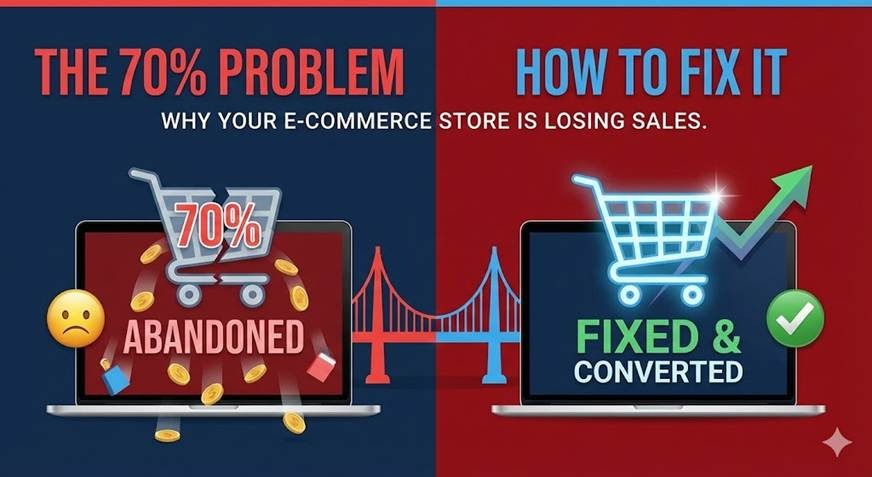
Running an online store in 2026 is a game of margins. You pay for traffic, you pay for inventory, and you pay for platforms. But the most painful cost isn’t what you spend; it’s what you lose.
According to extensive research, the average cart abandonment rate hovers around 70%. That means for every ten customers who add a product to their cart, seven leave without paying. If you can recover just a fraction of those lost sales, you don’t need more traffic—you just need a better converting store. Here is how to tighten up your e-commerce operations on platforms like Shopify and WooCommerce.
1. The Need for Speed (Technical Foundation)
Amazon has trained customers to be impatient. If your product pages take more than two seconds to load, potential buyers assume the site is broken or insecure.
This is often a platform issue. Shopify users need to be wary of installing too many apps, which inject heavy code and slow down the site. WooCommerce users need to ensure they are on high-performance hosting with proper caching. A fast store doesn’t just please customers; it pleases Google, helping your products rank higher in organic search results.
2. Frictionless Checkout
The checkout page is where the battle is won or lost. The number one reason for abandonment (aside from high shipping costs) is a complicated checkout process.
You must eliminate barriers. Allow “Guest Checkout” (forcing account creation is a conversion killer). Offer multiple payment gateways (Apple Pay, UPI, Credit Cards). As highlighted in studies by the Baymard Institute on checkout usability, simply optimizing the checkout flow can increase conversion rates by 35%. Every extra field a user has to fill out is an opportunity for them to change their mind.
3. Trust Signals and Social Proof
In a physical store, customers can touch the product. Online, they rely on trust. If your site looks generic or lacks verification, they won’t input their credit card details.

You need aggressive “Social Proof.” This goes beyond just star ratings. Use user-generated content (photos of real people using your product). Display security badges clearly. Ensure your “About Us” page tells a human story. If you are using WooCommerce or Shopify, use verified review plugins that prevent spam, proving to customers that the feedback is genuine.
The Platform Dilemma
Whether you are scaling on Shopify’s robust hosted environment or leveraging the limitless customization of WordPress/WooCommerce, the principles remain the same: Speed, Trust, and User Experience.
Navigating the technical differences between these platforms can be tricky. If you are debating which engine is right for your business, or want tips on optimizing your current store setup, you can head over to the MeraSEO blogs. Choosing the right architecture today will save you from a costly migration tomorrow.
Conclusion
E-commerce isn’t just about having a “Add to Cart” button. It’s about creating a seamless, trustworthy environment where the customer feels safe spending their money. Stop focusing solely on getting new visitors, and start focusing on closing the ones you already have.