
The Materials That Define This Segment
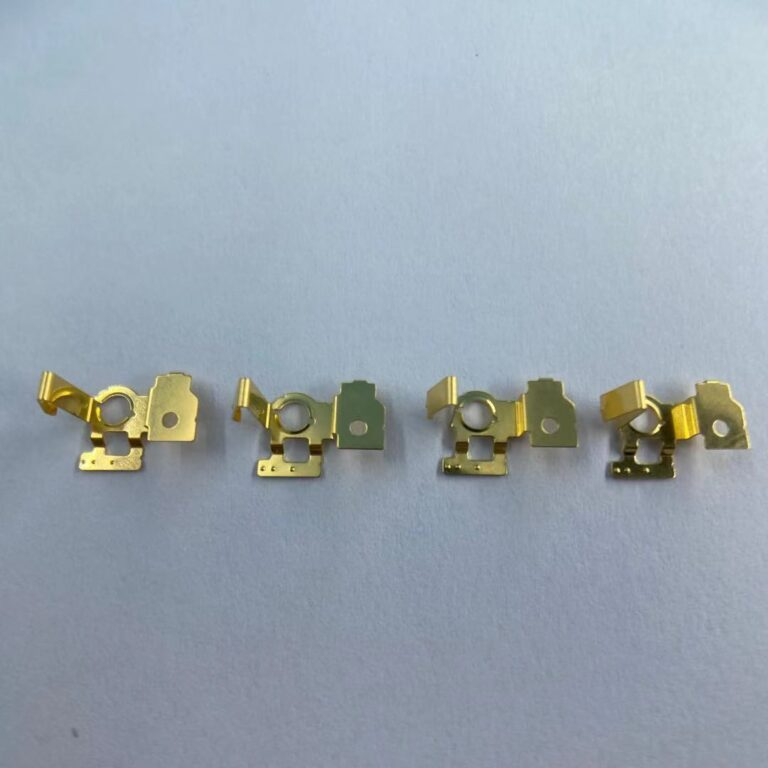
Non-ferrous metals are not a single category. They are a diverse family of materials, each with its own properties and its own challenges on the stamping floor.
Aluminum is lightweight, corrosion-resistant, and highly conductive. It is used for heat sinks, connectors, housings, brackets, and structural components. Common alloys include 1100, 3003, 5052, and 6061. Aluminum is soft and prone to galling, which makes lubrication and tooling design critical.
Copper offers excellent electrical and thermal conductivity. It is used for connectors, terminals, bus bars, and heat sinks. Copper alloys such as brass, phosphor bronze, and beryllium copper offer improved strength and spring properties. Copper scratches easily and requires careful handling.
Brass is an alloy of copper and zinc. It offers good strength, corrosion resistance, and machinability. It is used for electrical components, hardware, and decorative parts. Brass stamps well but can be prone to stress cracking if not properly annealed.
Bronze is an alloy of copper and tin. It offers good strength, corrosion resistance, and wear resistance. It is used for bearings, bushings, and electrical components.
Titanium is lightweight, strong, and corrosion-resistant. It is used for aerospace components, medical implants, and chemical processing equipment. Titanium work-hardens rapidly and requires specialized tooling and process controls.
Nickel and nickel alloys offer corrosion resistance and high-temperature performance. They are used for battery tabs, connectors, and aerospace components.
Precious metals such as gold, silver, and platinum are used for contacts, electrodes, and components that require high corrosion resistance and conductivity.
The Manufacturing Workflow
Non-ferrous metal stamping manufacturing follows a sequence that begins with the customer’s drawing and ends with inspected, packaged parts ready for assembly.
The process starts with design review. The manufacturer’s engineers examine the part drawing and assess whether the design is suitable for stamping. They look at material selection, tolerance requirements, bend radii, hole placement, and any features that might cause problems during production.
Tooling design and construction come next. The die is the heart of the stamping process. Its quality determines the quality of the finished part. Die design for non-ferrous materials requires special attention to clearances, surface finishes, and springback compensation.
Material procurement follows. The manufacturer sources the specified alloy in the correct thickness, temper, and width. Incoming material is inspected for chemistry, mechanical properties, and dimensional accuracy.
Production begins once the die is installed in the press and the material is loaded. The press cycles, the strip feeds, and the parts take shape. Operators monitor the process for signs of tool wear, material inconsistency, or dimensional drift.
Secondary operations follow. Depending on the part, these may include deburring, tumbling, passivation, anodizing, plating, heat treating, or assembly.
Final inspection verifies that the parts meet the drawing requirements. Depending on the part and the industry, inspection may include dimensional measurement, visual examination, hardness testing, conductivity testing, or other checks.
Packaging and shipping complete the process. Non-ferrous parts are typically packaged to prevent scratching, corrosion, and contamination during transit.
The Tooling Considerations
Tooling for non-ferrous stamping is not the same as tooling for steel. The differences are significant enough that some manufacturers specialize exclusively in non-ferrous work.
Clearances must be adjusted for the material. Aluminum and copper require different die clearances than steel to produce clean cuts and avoid excessive burrs.
Surface finishes on the die must be finer for soft materials. A die surface that works well for steel may cause galling when running aluminum. Polishing and coating the die surfaces reduces friction and extends tool life.
Springback compensation is built into the die. The amount of compensation depends on the material, the thickness, and the bend radius. Getting it right requires experience and often trial and error during die tryout.
Lubrication is critical. The right lubricant reduces friction, prevents galling, and extends tool life. The wrong lubricant can cause staining, corrosion, or residue that interferes with downstream processes.
Quality Control in Non-Ferrous Stamping
Quality control in non-ferrous stamping manufacturing goes beyond dimensional inspection. Several factors require attention.
Material verification ensures that the correct alloy and temper are used. A part made from the wrong alloy may fail in service, even if the dimensions are correct.
Surface finish inspection checks for scratches, galling, and other defects that can affect appearance or performance.
Mechanical properties testing verifies that the material meets the specified strength, hardness, and elongation requirements.
Conductivity testing is important for electrical components. Copper and aluminum parts must meet specified conductivity levels.
Corrosion testing may be required for parts used in harsh environments.
What to Look for in a Manufacturing Partner
The selection of a non-ferrous metal stamping manufacturer requires careful evaluation of several factors.
Material expertise is the first consideration. The manufacturer must understand how different non-ferrous metals behave during stamping and how to adjust the process accordingly.
Tooling capability is the second. The manufacturer must have the experience to design and build dies that produce quality parts from soft, springy, and galling-prone materials.
Quality systems are the third. The manufacturer must have the equipment and procedures to verify that parts meet specifications consistently.
Secondary operations are the fourth. The manufacturer should be able to provide deburring, finishing, and assembly services, either in-house or through qualified partners.
Production capacity is the fifth. The manufacturer must have the presses, automation, and workforce to meet the required volumes and delivery schedules.
The Bottom Line
Non-ferrous metal stamping manufacturing is a specialized discipline that requires different tools, different techniques, and different expertise than conventional steel stamping. The manufacturers who succeed in this segment understand the unique properties of aluminum, copper, brass, bronze, titanium, and other non-ferrous metals, and they design their processes around those properties. For engineers and buyers, understanding what these manufacturers do and how to evaluate them is essential to selecting components that perform reliably in applications where magnetic response, corrosion, conductivity, weight, or appearance matter.